


This post may contain affiliate links. Read our disclosure policy
Watch the recipe
What Is Peanut Chutney?
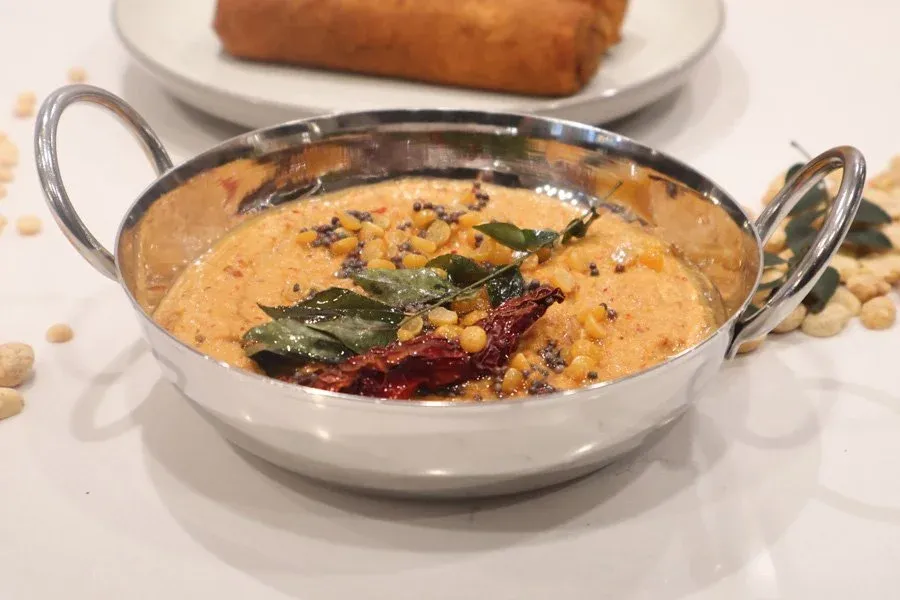
Peanut Chutney is an iconic South Indian condiment that features roasted peanuts, onions, garlic, and dried red chilies. It’s smoky with a subtle sweetness, and it’s paired with South Indian favorites such as dosa, idlis, and fritters. If South Indian cooking is new to you, then I suggest you make it no longer a distant destination by pairing this South Indian Roasted Peanut Chutney with a main of your choice as part of your Live to Cook one-month challenge! Get started for free today by signing up to my email newsletter, plus all of my latest recipes will be delivered to you directly to your inbox so you’ve always got inspiration!
To follow along with all the steps outlined in this recipe, be sure to watch the video recipe! If you’re not already, please subscribe to my YouTube channel, and don’t forget to hit the bell button so you’re notified when all of my video recipes go live! Let’s get roasting!
Why You’ll Love This Roasted Peanut Chutney
- Quick and easy to make: This Roasted Peanut Chutney only takes 15 minutes from start to finish, with a super quick prep time! You can make this chutney for any occasion!
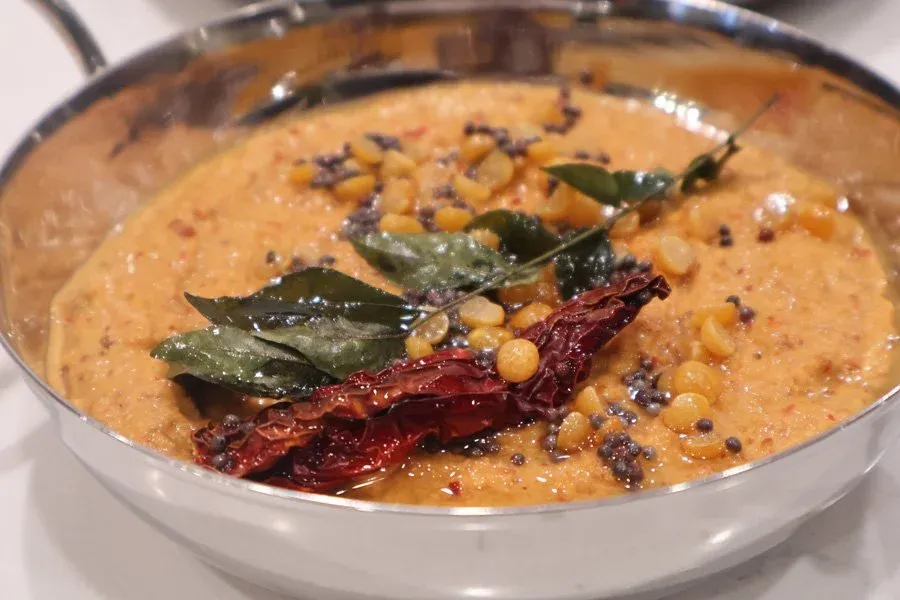
- Amazing texture: This South Indian Peanut Chutney can be blended to have a smooth texture, or you can leave it slightly coarse - that is the way that I like it and what I’ve shown here!
- Packed with flavor: This South Indian Peanut Chutney recipe delivers on a bit of heat and some subtle sweetness for an amazing experience, rich in South Indian aromatics such as curry leaves and mustard seeds. The Kashmiri red chilies provide the heat with a North Indian twist to this South Indian delight.
- Versatile chutney: There are plenty of ways to enjoy this simple peanut chutney recipe! Keep on reading for plenty of serving suggestions later on in this post!
Dietary Information for Indian Roasted Peanut Chutney
This Indian Roasted Peanut Chutney is…
- Vegetarian
- Dairy-free
- Vegan
- Gluten-free, if using certified gluten-free hing or by omitting it.

Questions You May Have
Is This Indian Roasted Peanut Chutney Recipe Healthy?▼
Yes, I would consider this Indian Roasted Peanut Chutney to be healthy! Peanuts are a nutritional powerhouse, loaded with protein and healthy fats. Peanuts are also high in many vitamins and minerals, including Vitamin E, magnesium, and phosphorous. Peanuts are a great source of antioxidants, and can assist in protecting against heart disease. If you want more information on the health benefits of peanuts, then you can check out this article.
Additionally, coconut oil is an excellent cooking oil, loaded with medium-chain triglycerides (MCTs), a kind of saturated fat. The MCTs that are present in coconut oil can assist with providing a quick supply of energy in a similar fashion that carbohydrates do. Additionally, MCTs can help reduce hunger. Coconut oil is also an excellent source of antioxidants, which can provide anti-inflammatory, anti-diabetic and brain health benefits. Get more information on the health benefits of coconut oil here.
Although this peanut chutney is higher in calories, remember that it is simply a condiment to be enjoyed with a main dish. You won’t be eating very much of this, so in moderation, this peanut chutney is indeed healthy and nutritious for you!
I Only Have Salted Peanuts! Can I Use That in This Roasted Peanut Chutney Recipe?▼
I actually used lightly seasoned roasted peanuts to make this Peanut Chutney recipe, so salted peanuts can definitely work here! As I describe in my free motivational guide to explore your potential in the kitchen, Make Cooking Fun!!, if you have a suitable substitute for an ingredient a recipe calls for, then there’s no reason to go out and buy exactly what is said! Either salted or unsalted peanuts will be perfectly fine to make our Indian Roasted Peanut Chutney! The only thing to consider is to be extra careful to taste the chutney before you add any added salt. If you are using unsalted peanuts, then you will need a little more salt. It is always important to salt to taste!
Do I Have to Use Coconut Oil For this Roasted Peanut Chutney?▼
I really love the flavor of coconut oil in this Roasted Peanut Chutney recipe, plus it’s a South Indian essential ingredient. However, if you don’t have coconut oil on hand or don’t want to use it for whatever reason, then don’t worry about it! The second option I’d choose if not using coconut oil would be ghee. However, keep in mind that if you use ghee to cook this Peanut Chutney recipe, then the chutney will no longer be vegan.

What If I don’t Have Chana Dal?▼
That’s no problem at all! If you don’t have chana dal, then there is no substitute. Simply don’t add anything here. The critical ingredients are the curry leaves, the red chilies, and the oil.
Can This Peanut Chutney Be Made without Garlic and Onion?▼
For context, Jainism is an ancient religion in India that is founded on the principles of non-violence, truth, and self-discipline. Folks who follow Jainism practice a strict vegetarian diet, and they avoid root vegetables such as garlic, onion, potatoes, and mushrooms to prevent harming small insects and microorganisms. As a result, individuals practicing Jainism may be curious if they can prepare this Roasted Peanut Chutney recipe without including garlic and onion. Furthermore, those who suffer from Irritable Bowel Syndrome (IBS) and other gastrointestinal diseases may have a hard time digesting garlic and onion, which are FODMAPs (fermentable oligosaccharides, disaccharides, monosaccharides and polyols); more specifically, garlic and onion contain high amounts of fructans, making these ingredients part of the Oligosaccharides FODMAP group.
With all that being said, technically you could make the Indian Peanut Chutney without incorporating garlic and onion. However, you’ll miss key flavors in the chutney, and it will not taste as good as its full potential. If you must omit these ingredients for your health or for your religious practice, then by all means do so!
Is there A Substitute For Curry Leaves In This Indian Peanut Chutney?▼
No, in this case there is really nothing you can do about curry leaves in our Indian Peanut Chutney recipe. There is nothing like curry leaves, and they are a critical ingredient for our peanut chutney recipe. Unfortunately, I really recommend you check out your local South Asian grocer or online to get the curry leaves! Don’t worry about the extra - they can easily be frozen and last a very long time in the freezer.

Tools Needed to Make Indian Peanut Chutney
- Salt crock
- Small sieve
- Food processor
- Measuring cups
- Measuring spoons
- Cutting board
- Paring knife
- Ramekins
- Non-stick pan
- Spatula
Ingredients for Roasted Peanut Chutney
To see all ingredients in the FULL PRINTABLE recipe card, or by pressing the “Jump to Recipe” button. You can save the recipe for later and scale the recipe based on how much spicy momo chutney you want to make so that you’ve got the perfect amount of all ingredients, no mental math required!

For the Peanut Chutney
- Peanuts: Whatever peanuts you have here will work. I used roasted and salted peanuts.
- Coconut oil: To roast the peanuts and to sauté the base ingredients for the chutney.
- Cumin seeds: Warm earthy aroma and once roasted, adds slight smokiness and complexity to the chutney.
- Onions: Roughly diced and sautéed for added sweetness.
- Kashmiri red chilies: Mild spiciness and lots of color.
- Garlic cloves: For a deep savory flavor to balance the richness of the peanuts.
- Tamarind: You want to use a small piece of tamarind that has soaked in warm water for at least 10 minutes.
- Water: To help get the perfect consistency
- Salt: Essential seasoning to taste.
For the Tadka
- Coconut oil: To cook the ingredients for the tadka or tempering.
- Kashmiri red chilies: Mild spiciness and lots of color.
- Chana dal: Adds a fun crispy texture to contrast the creaminess.
- Curry leaves: A very distinct fresh South Indian essence, herbal and citrusy aroma.
- Mustard seeds: Adds a sharp pungent bite to enhance the overall depth of flavor.
- Hing: Adds an umami like onion-garlic like aroma and aids with digestion.

How to Make Roasted Peanut Chutney
For the Peanut Chutney
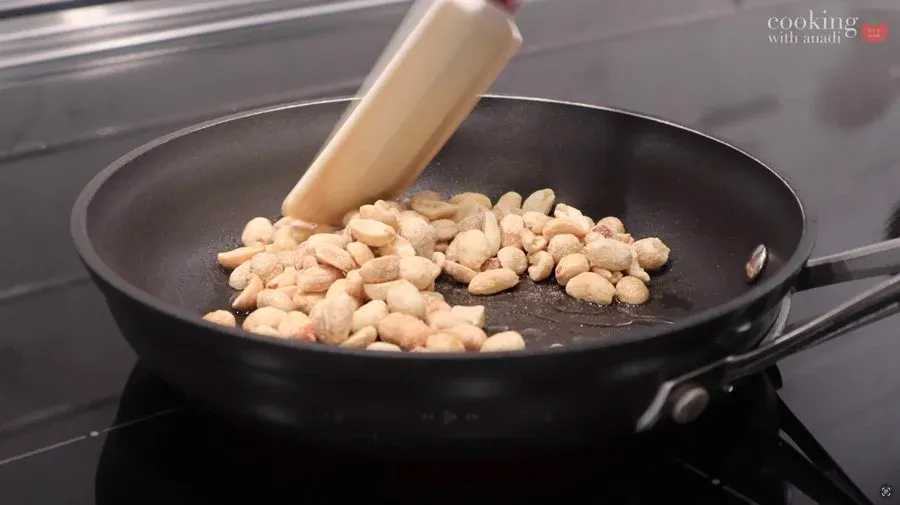
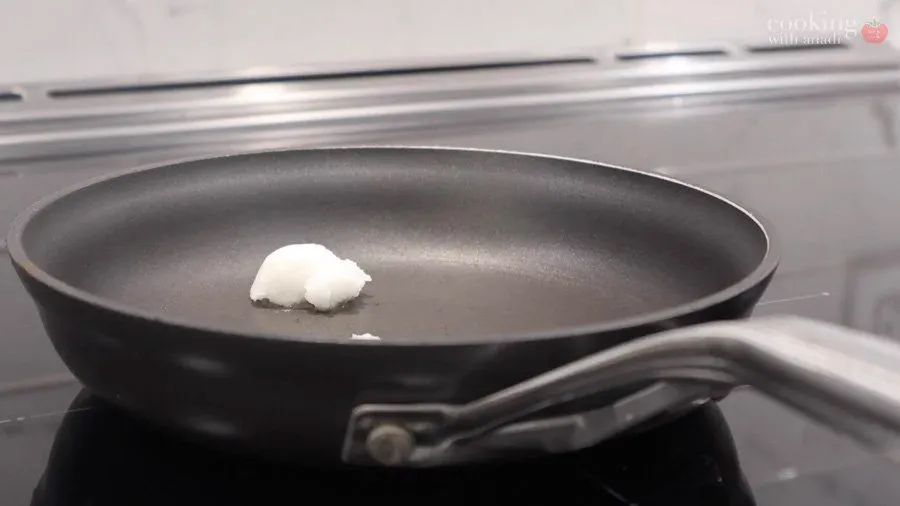
Heat ½ tablespoon coconut oil in a pan over medium heat. Add peanuts and roast until golden brown and aromatic. Remove from the pan and set aside.

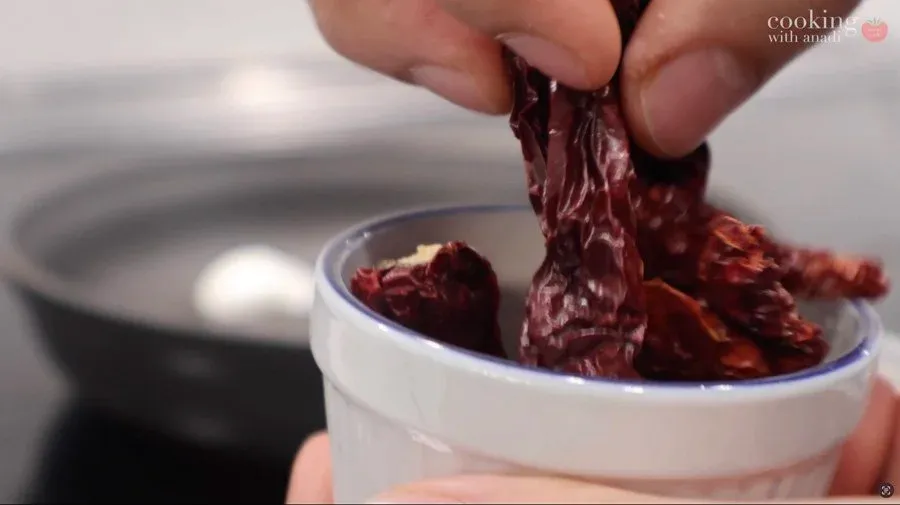
In the same pan, add the remaining ½ tablespoon coconut oil. Add cumin seeds, red onions, dried Kashmiri chilies, and garlic cloves. Sauté until the onions are soft and fragrant.


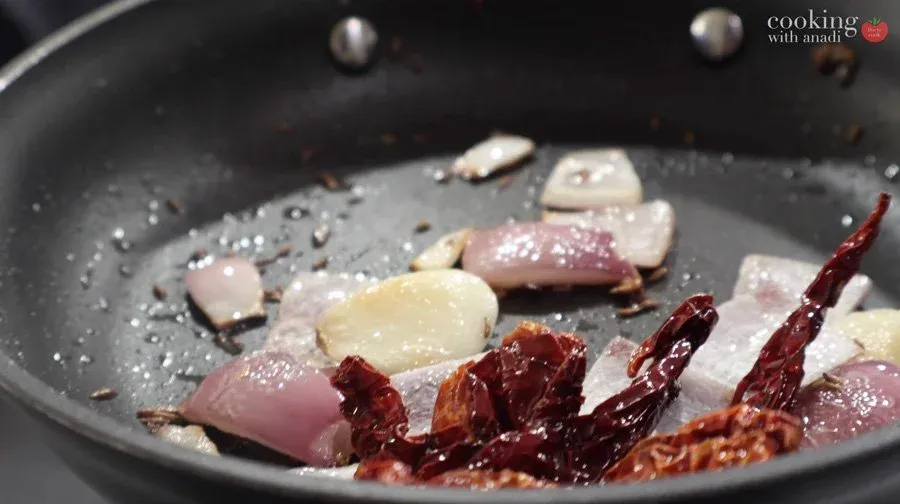
Remove from heat.
In a blender, combine the roasted peanuts, sautéed ingredients, soaked tamarind, ½ cup water, and salt to taste.


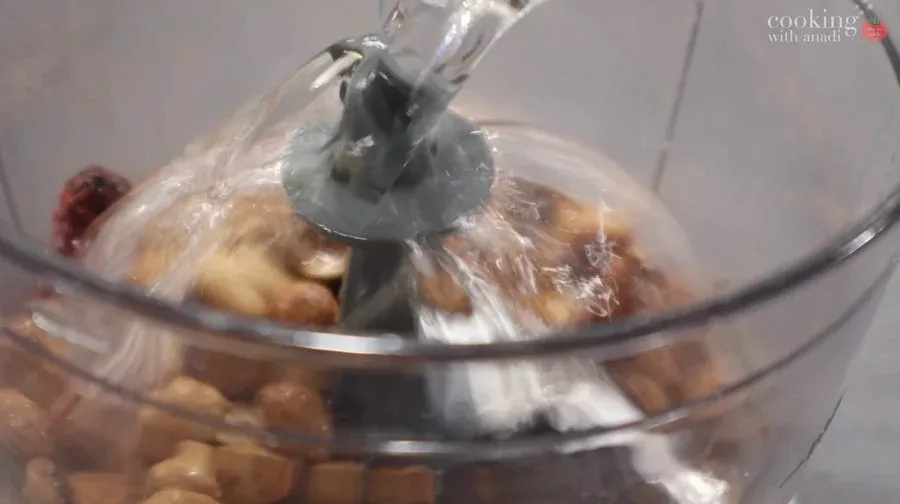
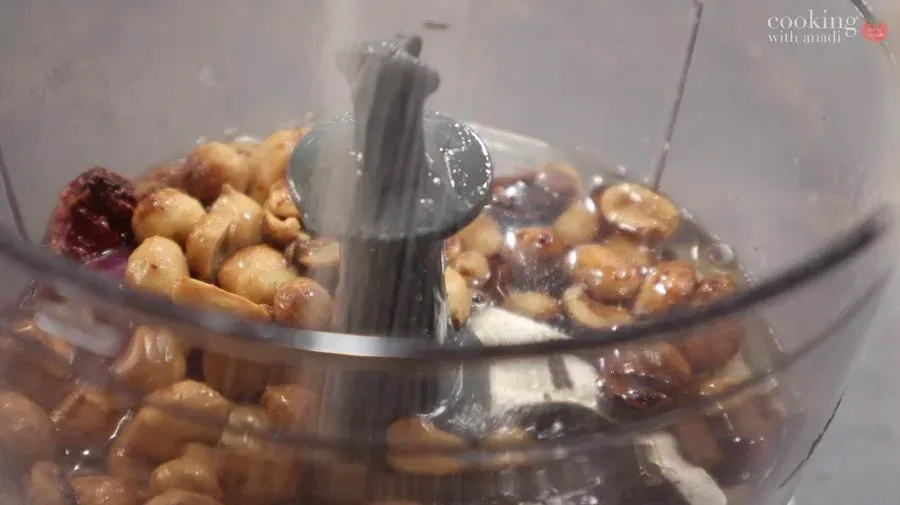
Blend until smooth. Add more water if needed for desired consistency.

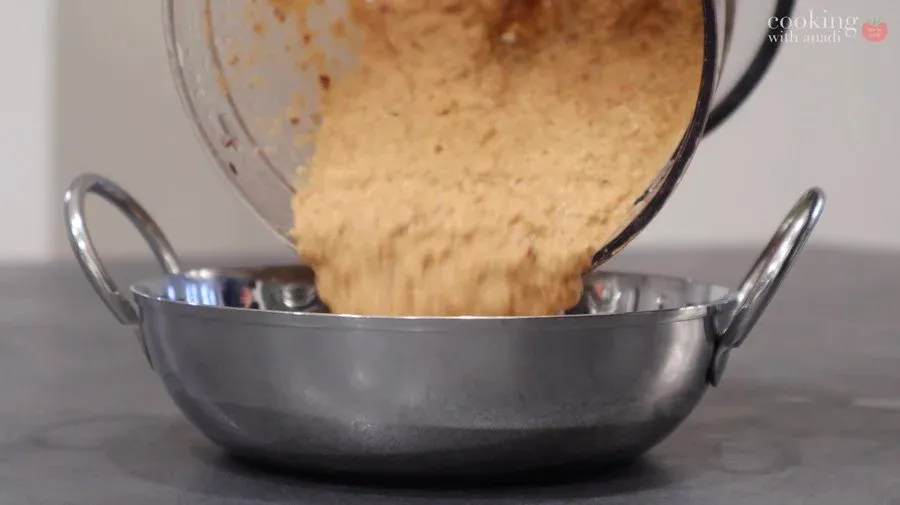
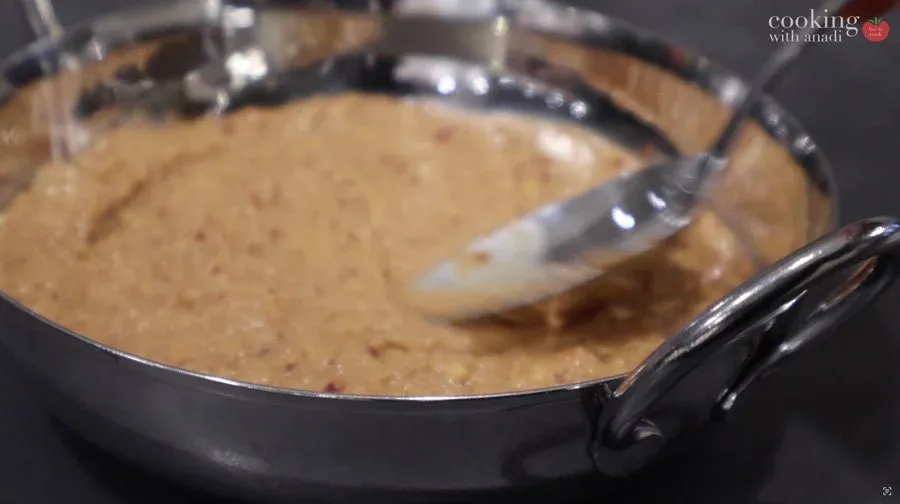
For the Tadka/tempering
Heat 1-2 teaspoons coconut oil in a small pan.
Add dried Kashmiri chilies, chana dal, mustard seeds, and hing.
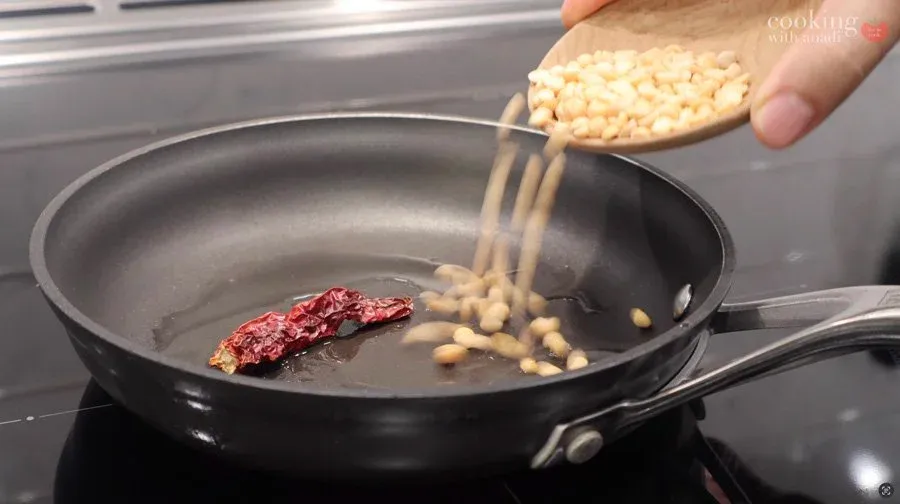

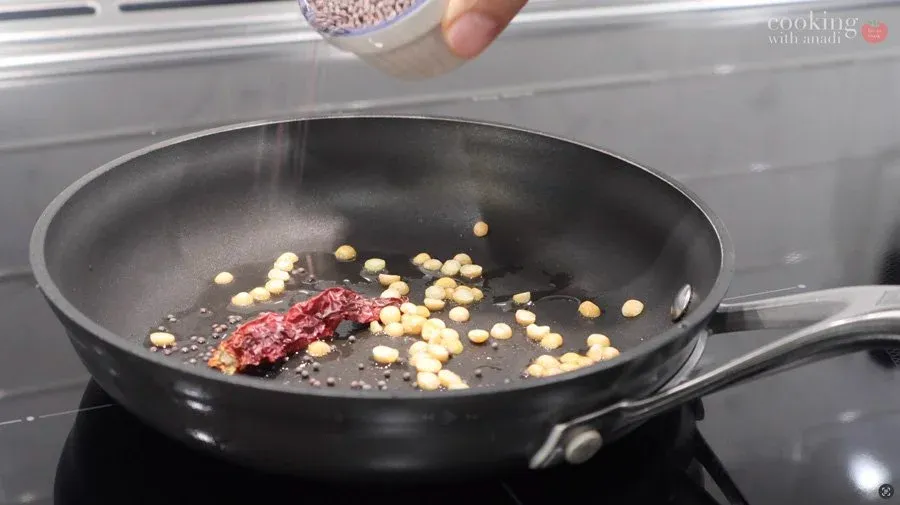
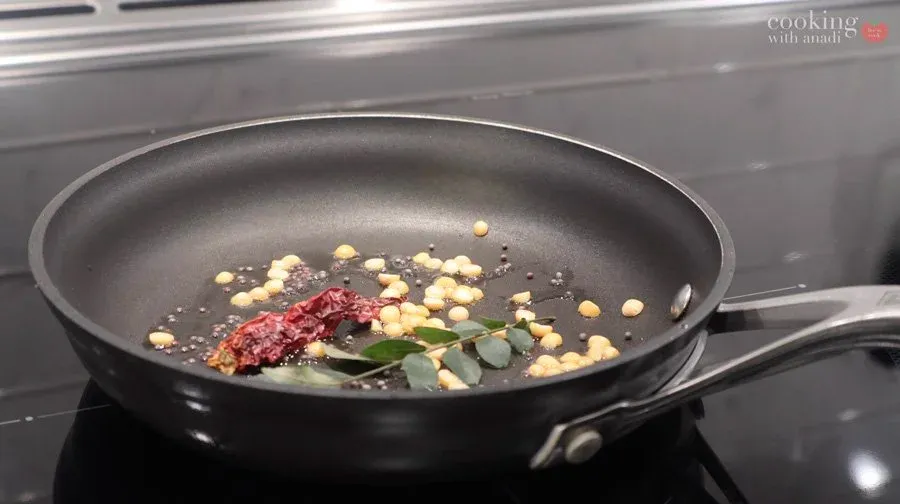
When the mustard seeds start popping, add curry leaves and sauté for a few seconds.
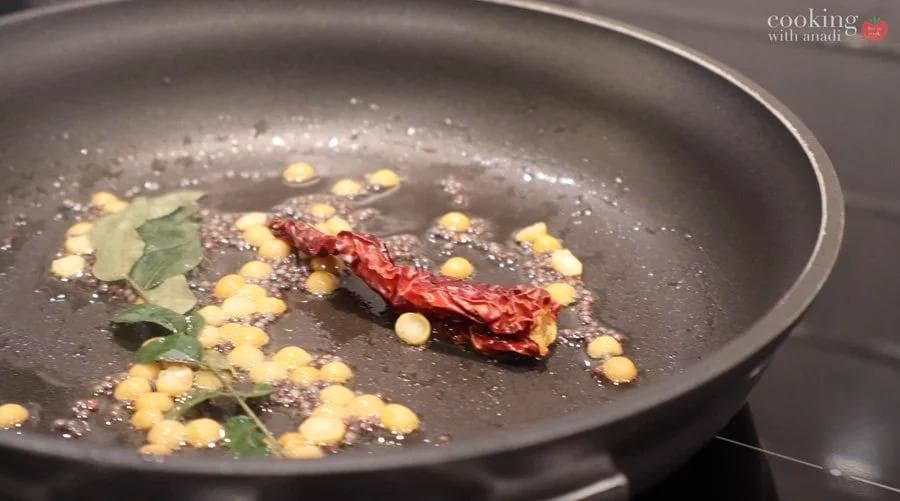
Pour the tempering over the blended chutney and mix well.

Tips for a Super Flavorful Indian Roasted Peanut Chutney
Roast Peanuts well: Use low to medium heat to roast the peanuts evenly and stir continuously. If using pre-roasted peanuts, dry-roast them for a minute to refresh their flavor. How to Balance Flavors in This Indian Roasted Peanut Chutney:
- Tamarind: If the chutney is too tangy, reduce the tamarind or balance it with a pinch of jaggery or sugar.
- Spice Level: Adjust the number of Kashmiri chilies based on heat preference. You can also mix Byadgi chilies, which are a type of mild South Indian red chili, primarily found in Karnataka, known for their deep red color.
- Salt: Always add salt as you go and ensure to taste after blending the peanut chutney mixture.
- Tadka/Tempering Tips: Add mustard seeds first, and once they start popping, add the remaining ingredients. Curry leaves should be added last for the best aroma.
Texture: To achieve a smooth and creamy chutney, ensure to blend the Indian Peanut Chutney while the mixture is slightly warm. Tempering tips: Keep the tadka oil hot before pouring it over the chutney for maximum flavor infusion.
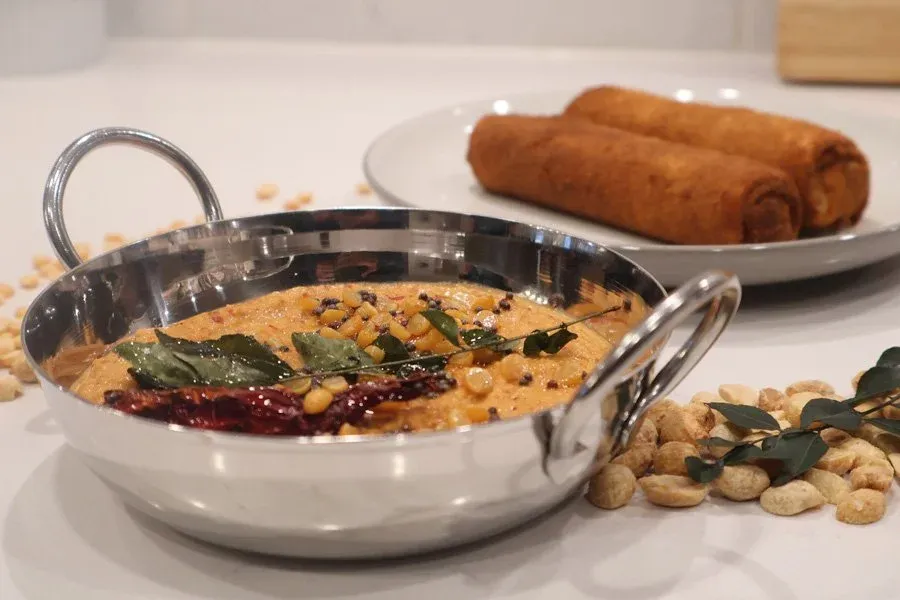
How to Serve Indian Roasted Peanut Chutney
This Indian Roasted Peanut Chutney recipe would typically be served with South Indian staples, such as dosas, vadas, and idlis. However, there’s no need to stop there! This peanut chutney recipe can be quite versatile to use as a dip for a variety of breads, snacks and rice. Here are some ideas:
- Breads: Rotis or parathas, or even stuffed parathas like Aloo Paratha, Paneer Paratha, Broccoli-Cheese Paratha, Gobhi Paratha, or Chicken Keema Paratha.
- Snacks: Mushroom Puff Patty, Paneer Jalfrezi Samoas, Steamed Chicken Momos, Air Fryer Aloo Chaat, Aloo Cutlets.
- Breakfast: South Indian Rava Upma, Besan Chilla, Indian-Spiced French Toast, North Indian Potato Brunch Rolls
- Rice: Plain Basmati Rice, Jeera Rice, Pudina-Dhanya (Mint-Cilantro) Pulao, Turmeric Rice, Vegetable Pulao.
How to Store Roasted Peanut Chutney▼
To store your Roasted Peanut Chutney in the fridge, all you need to do is transfer the chutney into a mason jar or an airtight container. Because we have garlic in the chutney, I would not recommend that you keep it longer than 5 days.
To store the Roasted Peanut Chutney for longer, then you can definitely freeze it. You can freeze in small portions based on how much you plan to eat, and thaw as needed. Your peanut chutney will last for about 4 months in the freezer.

Palli Chutney, Groundnut Chutney and the Regional Cousins
If you have eaten this at a South Indian breakfast counter you may know it by another name. In Telugu it is palli chutney, and on plenty of Indian menus written in English it turns up as groundnut chutney. Andhra style peanut chutney is the version most people mean when they say it is hot, and it usually leans on green chilies rather than the dried Kashmiri red chilies I use here, which give color and a gentler heat instead. Coconut chutney is the other classic served alongside it, and the two of them together on one plate is the standard dosa spread.
Among Indian chutneys this one sits on the richer, nuttier end. The peanuts give it body, so it behaves more like a dip than a thin sauce, which is exactly why it works so far beyond the South Indian breakfast table.
Roasting the Peanuts and Getting a Smooth Paste
Everything good about this chutney comes from how the half cup of peanuts is roasted. Half a tablespoon of coconut oil over medium heat, stirred constantly, until they turn golden and the nutty aroma comes up. If you are starting from raw peanuts they will need a few minutes longer than the roasted and salted ones I usually reach for; if you are using dry roasted peanuts from a packet, a one-minute dry roast in the hot pan is enough to wake them up again.
One thing worth knowing: peanut skin carries a faintly bitter taste. Leaving the skins on is completely normal and gives a darker chutney, but if you want a paler, sweeter result, tip the hot peanuts into a clean kitchen towel and rub them between your palms so the skins flake off before you grind them.
For the grind, put the roasted peanuts, the sauteed onion, garlic, quarter teaspoon of cumin seeds and chilies, the soaked tamarind and half a cup of water into a blender or grinder with salt to taste. Blend while the mixture is still slightly warm, which is what gets you a genuinely smooth paste rather than a grainy one, and add water a spoonful at a time until it is the consistency you want. I like mine left slightly coarse.
Variations to Try
The base is forgiving, so it takes adjustments well:
- Green chilies in place of one or two of the Kashmiri chilies push it toward that sharper Andhra heat. Kashmiri chilies are there for color more than fire.
- A small piece of ginger blended in with the garlic adds a warm bite that cuts the richness of the peanuts.
- A chopped tomato, sauteed with the onion until it collapses, makes a tangier, looser chutney and stretches the batch further.
- No tamarind in the house? A squeeze of lemon juice stirred in at the end gives you the sourness the tamarind was providing, though the flavor is brighter and less deep.
- Urad dal alongside the teaspoon of chana dal in the tadka is the classic South Indian pairing, and it adds a second layer of crunch on top.
Serving It, and Keeping It
Beyond dosa, idli and vada, this is excellent with uttapam, where the thicker pancake and the onion in the batter stand up to the peanuts nicely. Serve it at room temperature so the coconut oil in the tempering stays loose.
Store leftovers in an airtight container in the refrigerator and use them within a few days. Two things to expect: the chutney thickens as it sits, so loosen it with a spoonful of water before serving, and the tadka fades faster than the chutney does. If you are bringing it back out on day two, heat another teaspoon of coconut oil with half a teaspoon of mustard seeds, let them splutter, add a few curry leaves and pour that fresh tempering over the top. It costs a minute and it is the whole difference between this and anything store-bought.
Let me know what you think of this recipe in the comments! If you’ve tried this recipe, be sure to post it on social media and tag it with #cookingwithanadi and mention me @cooking.with.anadi. Thank you!
Recipe by Anadi Misra
Creamy, smoky, and ready in minutes, this South Indian roasted peanut chutney is the perfect dip for dosas and idlis. A simple vegetarian essential you will want to make again and again.
Oven-baked
5.0 · 1 rating
5 min
Prep
10 min
Cook
15 min
Total
8
servings
makes 1 cup
easy
Level
Ingredients
Ingredients
Tap any quantity to scale
For the peanut chutney
Instructions
For the peanut chutney
- 1
Heat 1 ½ tsp coconut oil in a pan over medium heat. Add peanuts and roast until golden brown and aromatic. Remove from the pan and set aside.
Heat 1 ½ tsp coconut oil in a pan over medium heat. Add peanuts and roast until golden brown and aromatic. Remove from the pan and set aside.
- 2
In the same pan, add the remaining 1 ½ tsp coconut oil. Add cumin seeds, red onions, dried Kashmiri chilies, and garlic cloves. Sauté until the onions are soft and fragrant.
In the same pan, add the remaining 1 ½ tsp coconut oil. Add cumin seeds, red onions, dried Kashmiri chilies, and garlic cloves. Sauté until the onions are soft and fragrant.
- 3
Remove from heat.
Remove from heat.
- 4
In a blender, combine the roasted peanuts, sautéed ingredients, soaked tamarind, ½ cup water, and salt to taste.
In a blender, combine the roasted peanuts, sautéed ingredients, soaked tamarind, ½ cup water, and salt to taste.
- 5
Blend until smooth. Add more water if needed for desired consistency.
Blend until smooth. Add more water if needed for desired consistency.
For the tadka/tempering
- 1
Heat 1–2 tsp coconut oil in a small pan.
Heat 1–2 tsp coconut oil in a small pan.
- 2
Add dried Kashmiri chilies, chana dal, mustard seeds, and hing.
Add dried Kashmiri chilies, chana dal, mustard seeds, and hing.
- 3
When the mustard seeds start popping, add curry leaves and sauté for a few seconds.
When the mustard seeds start popping, add curry leaves and sauté for a few seconds.
Learn the technique - 4
Pour the tempering over the blended chutney and mix well.
Pour the tempering over the blended chutney and mix well.
Nutrition per serving
Did you make this recipe? Tag @cooking.with.anadi on Instagram and hashtag it #cookingwithanadi

Tested & written in Anadi’s kitchen
Recipe history
- April 16, 2026 — Reworked and refreshed for the 2026 relaunch — new photography, restructured and standardized ingredients & instructions.
Filed under
You might also like

Tangy Amla Chutney Recipe (Indian Gooseberry)
Tangy, bold, and packed with flavor, this Amla Chutney recipe is quick to make and perfect as a dip or spread alongside dosa, snacks, and more. A must-try Indian classic.
Easy Homemade Mint Chutney Recipes in Minutes
Make fresh, vibrant mint chutney at home in minutes! This easy Indian mint chutney recipe is packed with bold flavor and pairs perfectly with snacks, grills, and more.
Delicious Sweet & Spicy Tomato Chutney Recipe
Make this bold, sweet and spicy Indian tomato chutney at home in minutes. Perfect with dosa, rice, or roti, it is a simple vegetarian recipe bursting with flavor.
Delicious Sweet & Spicy Tomato Chutney Recipe
Make this bold, sweet and spicy Indian tomato chutney at home in minutes. Perfect with dosa, rice, or roti, it is a simple vegetarian recipe bursting with flavor.

Quick And Easy Spicy Momos Chutney Recipe
Make the perfect spicy momos chutney at home in minutes! This quick and easy Indian dip is bold, fiery, and packed with flavor — ideal for dipping momos or any snack.

Discover Three Mouth-Watering Coconut Chutney Recipes
Discover three creamy, flavorful coconut chutney recipes perfect for dosa, samosa, and more. Quick, easy, and authentically Indian, these versatile dips belong in every kitchen.


Comments
No comments yet — be the first to share your thoughts!
Leave a review
Be the first to share how it went — your note helps other cooks (and earns the recipe its stars).