


This post may contain affiliate links. Read our disclosure policy
Watch the recipe

Cooking With Anadi
12K subscribers · fish, rice, and sweet spicy umami sauce that clicks together
What Is Umami Sauce?
This Umami Sauce will transform your meals! Inspired by the umami sauce used at the restaurant I worked at to make sushi, this umami sauce is so delicious and surprisingly easy to make! As I describe in my free motivational guide to explore your potential in the kitchen, Make Cooking Fun!, going out to eat can inspire you to try new creations! Before making this sauce, I had sushi for dinner, and I was so excited to make some pressed sushi the next day! This umami sauce is primarily used for pressed sushi, but you can use it for any type of sushi, making it awesome for lunch or dinner. You could also pair it with Japanese sides. I’ll give you some more serving ideas later on in this post!
The umami sauce was one of my favorite delicacies when I was working at the restaurant. Now that I don’t work there anymore, I can safely admit that I’d lick SO MUCH of it! It’s seriously THAT GOOD! If making sushi has been on your bucket list, then I encourage you to try it out along with this sauce to go with it as part of your Live to Cook one-month challenge! You can get started on your cooking journey free today by signing up to my email newsletter, plus you’ll receive all of my new recipes delivered straight to your inbox!
Check out the video to see how we make the umami sauce and how we pair it with pressed sushi! It would mean a lot if you could please subscribe to my YouTube channel if you’re not already, and don’t forget to press the bell button so you’re notified when all of my video recipes are live! Let’s get mixing!

Why You’ll Love This Umami Sauce!
- Easy and quick to make: This no-cook sauce is really fast to mix everything together once you’ve prepped your teriyaki reduction (more information on how to do this later on in this post!). That’s the only step!
- Creamy: Rich and luscious, this sauce is absolutely irresistible!
- Flavorful: So much is going on here, making it the perfect complement to your meal!

What Does Umami Mean?
Umami is one of the tastes - including sweet, sour, salt, and bitter. Umami is a deep and savory flavor that increases saliva production, and it can last longer on the tongue compared to other tastes. In culinary uses, umami adds that extra punch that enhances the flavor of a dish. The term originated from Japanese, meaning “pleasant savory taste,” and it’s associated with foods such as Parmesan cheese, soy sauce, miso, cured meats, mushrooms, seaweed, and anchovies.
What Does Umami Sauce Taste Like?
It’s rich, savory, and slightly sweet with controlled heat.
The mayonnaise gives it body and creaminess. The miso brings deep umami and a subtle fermented saltiness. The teriyaki reduction adds gloss and balanced sweetness while seasoning the sauce. Sriracha layers in heat while the garlic sharpens the edge. The dash of lime juice lightens the sauce and keeps it from feeling heavy.
Once torched it develops light caramelization on top while staying creamy underneath. You get sweet, salty, creamy, spicy and smoky in one bite — built to complement the salmon, not compete with it. It’s bold yet balanced.

Dietary Information for This Umami Sauce
This Osaka umami spicy sauce is:
- Gluten-Free — with one thing to check. Everything here is naturally gluten-free except the teriyaki: most bottled teriyaki is built on soy sauce, and conventional soy sauce is brewed with wheat. Use a tamari-based or certified gluten-free teriyaki and the sauce is in the clear.
- Vegetarian
Tools Required for the Best Umami Sauce Recipe
- Saucepan
- Spatula
- Microplane
- Ramekins
- Measuring cups
- Measuring spoons
- Whisk
- Mixing bowl
- Wooden spoon
- Squeeze bottle
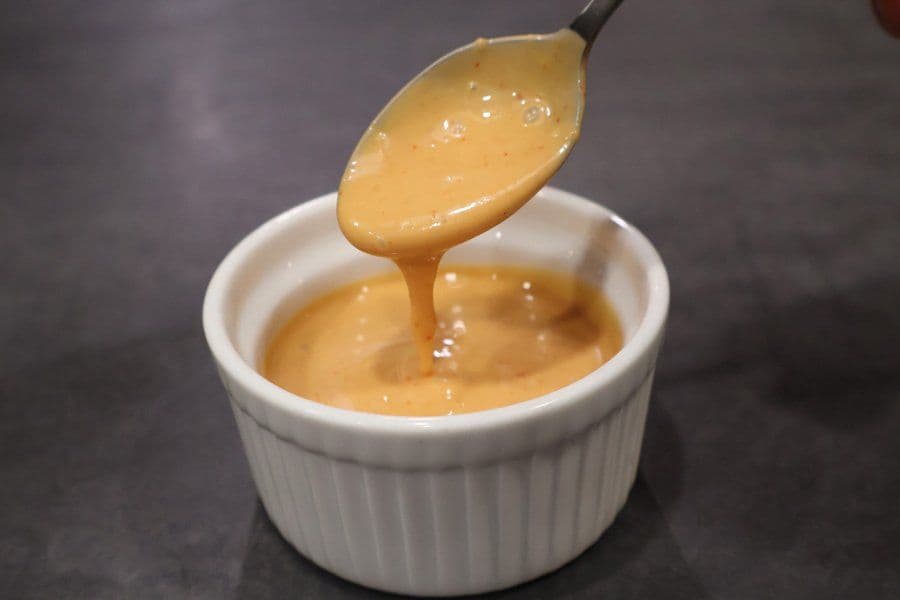
Ingredients for Osaka Umami Sauce
The FULL PRINTABLE recipe card has all ingredients and their quantities, which can be found by scrolling to the bottom of this post or by pressing the “Jump to Recipe” button. You will also be able to use the recipe card to scale the ingredients based on how many portions of hot honey you’re looking to make. By default, this will make about 1 cup.

- Mayonnaise: You can use store-bought mayo or if you’re very ambitious, make your own! If you’re going to use a store-bought mayo, then the best choice (if you have it already!) would be Kewpie, which is Japanese mayo. I like this mayo because it’s got a bit of a lighter taste and mouthfeel. No problem at all if you don’t have it, however! As you can see in the picture, I definitely did not make the umami sauce here.
- Teriyaki reduction: This is thickened teriyaki sauce. We’ll go over how to do this below.
- White miso paste: This is where most of the flavor will come from!
- Sriracha: I recommend you add less initially and add more if desired.
- Garlic clove: Use a microplane to grate it.
- Lime or lemon juice: You can use freshly squeezed juice or from a bottle.
- White pepper: Just a small pinch.
How to Make Umami Sauce
For the Teriyaki Reduction
Add teriyaki sauce to a small saucepan over medium-low heat.

Bring to a gentle simmer and cook 6–10 minutes, stirring occasionally. Do not boil aggressively.

Reduce until thickened by about half and the sauce coats the back of a spoon. It should leave a line when dragged through and slowly settle back.
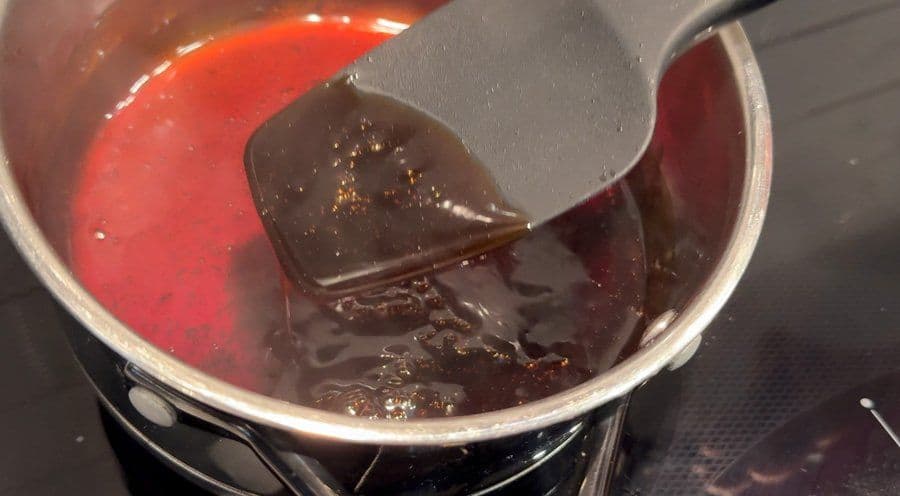
Remove from heat and cool completely. The glaze will thicken further as it cools.

For the Umami Sauce
Add all the ingredients in a bowl and mix well.
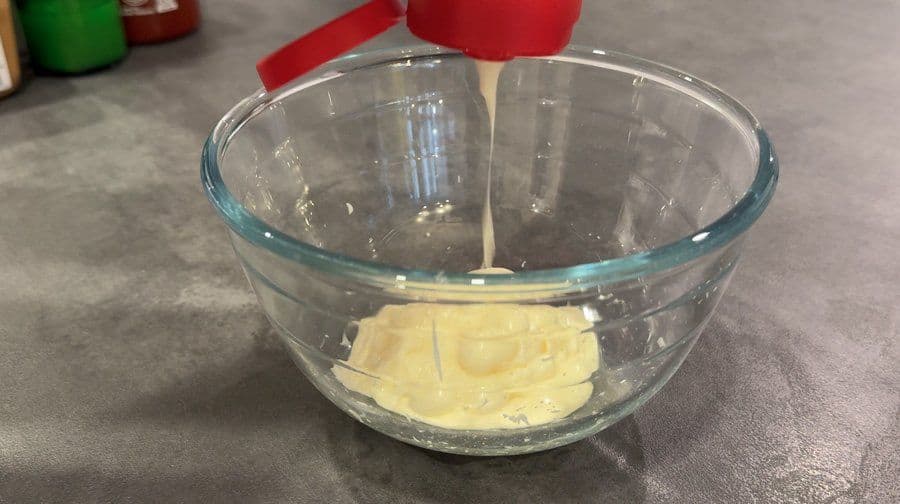
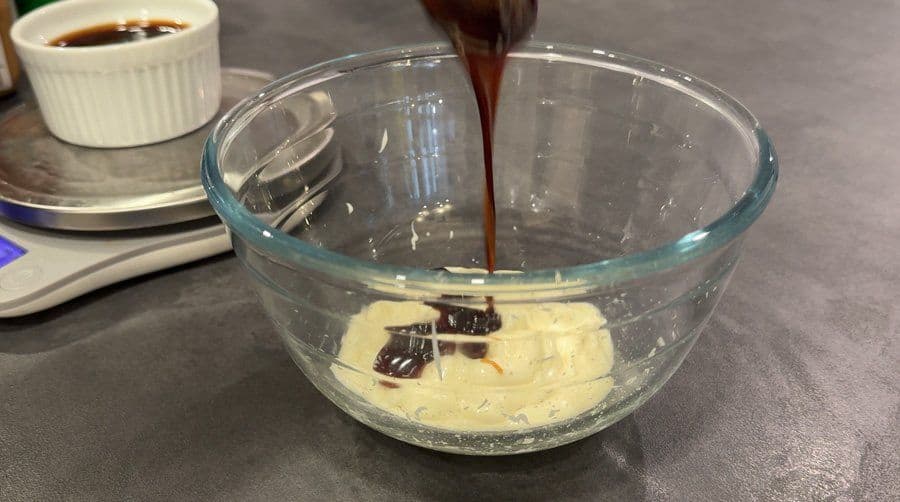
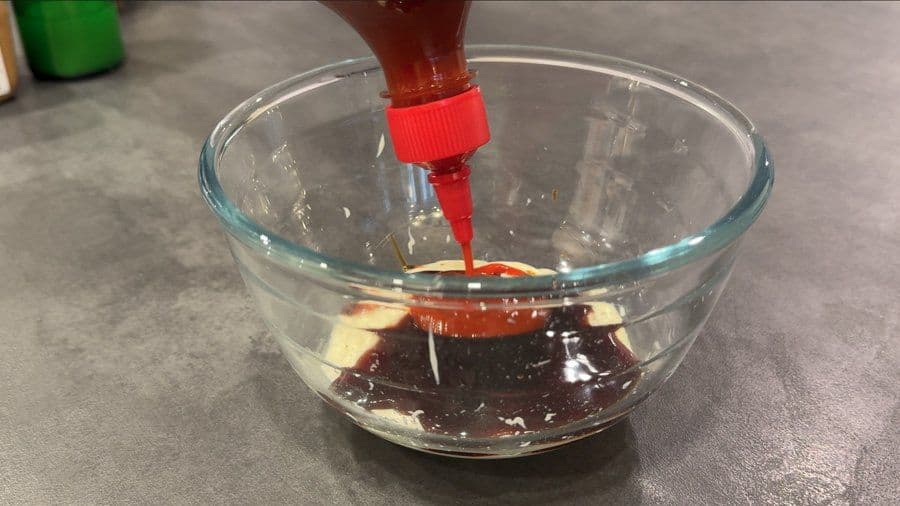


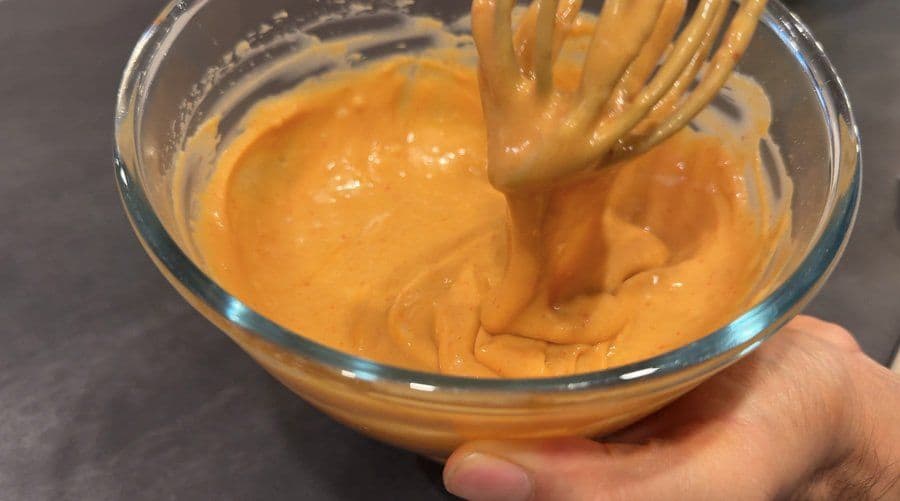
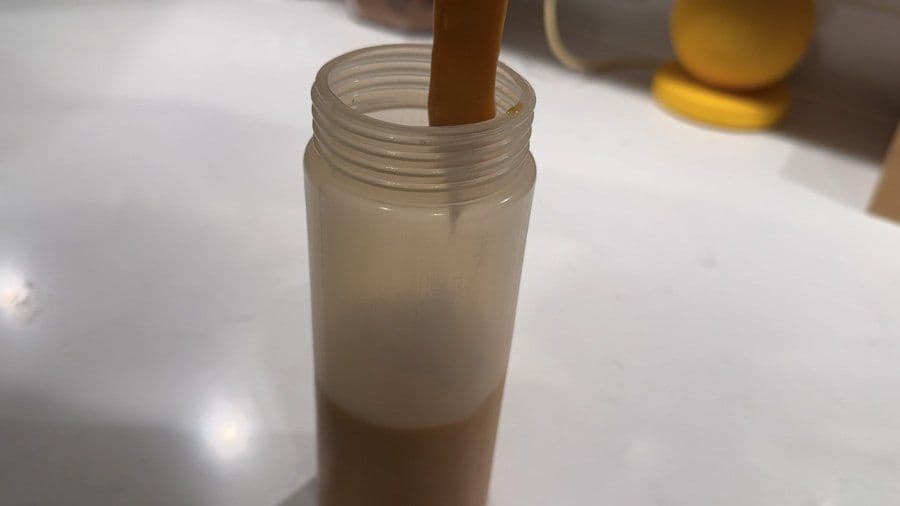
Place sauce into a squeeze bottle. Cover, label and refrigerate for at least 20 minutes before using.
How Can I Adjust the Flavors of This Umami Sauce?▼
- More heat? Add sriracha in small increments. Don’t flood it — heat should support, not dominate.
- Want it deeper? Increase the miso slightly. A little goes a long way.
- Too salty? Add mayonnaise to rebalance instead of diluting with liquid.
- Sweeter profile? Add more teriyaki reduction. Keep it controlled so it doesn’t overpower the fish.
- Need more brightness? A few drops of lemon or rice vinegar will sharpen it up.
- Too thick? Loosen with a small splash of water.
- Too thin? Add mayonnaise, not more teriyaki.
Chill after adjusting. Cold sauce always tastes more composed.
Tips for the Best Umami Sauce
- Use full-fat mayonnaise. Lower-fat versions won’t hold up as well when torched and can split.
- Make sure the teriyaki reduction is fully cooled before mixing. Warm glaze will thin the sauce and affect consistency.
- Whisk the miso in thoroughly so there are no lumps. Smooth sauce = even torching and better presentation.
- Microplane the garlic instead of mincing. You want flavor without visible chunks.
- Start lighter on the sriracha and build up. The miso and teriyaki already bring salt and depth — heat should support, not overpower.
- Chill the sauce at least 20 minutes before using. Cold sauce holds its shape, torches better, and stays where you pipe it.
How to Store The Best Umami Sauce▼
Simply pour the umami sauce in a mason jar, an airtight container, or in a squeeze bottle and keep it in the fridge.
How to Use Umami Sauce
This Umami sauce is typically used for Japanese dishes. Here are ways that I use this Umami Sauce:
Other Easy Sauce Recipes
- Super Simple Hot Honey
- No-Cook Italian Pizza Sauce
- Authentic Salsa Roja
- Argentinian Salsa Criolla
- 5 Minute Stir Fry Sauce
- Classic Basil Pesto Sauce
- Fresh Quick Chimichurri Sauce
What is umami sauce?▼
Umami sauce is a creamy, savory Japanese-inspired condiment. This Osaka-style version blends teriyaki and a thickened teriyaki reduction with mayonnaise, white miso, a little sriracha, grated garlic and a squeeze of lime — rich and deeply savory, with just a touch of sweet and spice.
What does umami sauce taste like?▼
Creamy and bold: savory and a little sweet from the teriyaki, deep and slightly funky from the white miso, with a gentle warmth from the sriracha. The garlic and lime keep it bright so it never feels heavy.
What do you use umami sauce on?▼
It's a do-everything finishing sauce — drizzle it over rice bowls, noodles and sushi, spoon it onto grilled chicken, salmon or vegetables, or use it as a dip for fries and dumplings or a spread on burgers and sandwiches.
Where Umami Actually Comes From
Umami sat unnamed for most of culinary history. Cooks everywhere knew that aged cheese, cured ham, dried mushrooms, fish sauce and long-simmered stock all did something the four familiar tastes could not explain, but nobody had a word for it. In 1908 the Japanese chemist Kikunae Ikeda, working at Tokyo Imperial University, set out to find what made kombu dashi so satisfying, isolated the compound responsible, and named the taste umami — roughly, deliciousness.
What he had isolated was glutamate, an amino acid. That is the mechanism behind the whole category: proteins are chains of amino acids, and processes that break those chains down — fermenting, aging, curing, drying, slow cooking — release glutamate in its free form, which is the form the tongue can detect. It took most of the following century for umami to be accepted as the fifth of the basic tastes, alongside sweet, sour, salty and bitter, and the receptors that respond to it were only identified in the last couple of decades.
Which is exactly why this sauce works the way it does, and why the ingredient list is shorter than you would expect for something this savory:
- White miso is fermented soybean. Months of fermentation have already broken those soy proteins down, so the paste arrives loaded with free glutamate. This is why the ingredient notes say most of the flavor comes from here despite it being ten grams.
- Teriyaki is soy-sauce based, and soy sauce is fermented for the same reason with the same result. Reducing it by half does not just thicken it — it concentrates everything already in there.
- Mayonnaise contributes fat, and fat is what carries these flavors across the palate and makes them linger rather than hitting and vanishing. It is doing more than making the sauce creamy.
There is a second thing worth knowing, which is that glutamate does not work alone. Certain compounds found in cured and dried foods multiply its effect rather than adding to it, which is why the classic pairings across every cuisine are combinations rather than single ingredients. Here you have two fermented soy products stacked on top of each other, and that is why a sauce made in five minutes tastes like it has been developing for hours.
Swaps, Label Checks and How Long It Keeps
Working from what is on hand, and what to watch for:
- Miso: white miso is mild and slightly sweet, which is what this sauce is built around. Red or darker miso is fermented longer and is considerably saltier and more assertive, so if that is what you have, start with about half the quantity and taste before adding more. There is no salt in the recipe, so the miso is carrying that job as well.
- Sriracha: gochujang or sambal oelek will both work, but they behave differently — gochujang is sweeter and thicker, so cut back on the teriyaki reduction slightly, and sambal is sharper with no sweetness at all. Either way, the recipe note holds: start with less than you think and build up.
- To make it fully vegan rather than vegetarian, a plant-based mayonnaise is the only substitution needed. Miso, teriyaki, sriracha, garlic, citrus and white pepper are all already plant-based.
- Storage: the sauce keeps as long as the mayonnaise you built it with, so let the date on that jar be your guide rather than a rule of thumb. Keep it in the squeeze bottle or a jar with a tight-fitting lid, in the fridge, and give it a shake before each use since a little separation is normal.
- Do not freeze it. Freezing splits mayonnaise-based sauces — the emulsion breaks and thaws into an oily, grainy mess that no amount of whisking brings back. If you want small amounts on hand, make a smaller batch rather than freezing portions.
The reduction is the one step worth making ahead. It takes the longest and it has to cool completely anyway, so making it the day before and keeping it in the fridge turns this into a genuinely two-minute sauce on the day.
Where This Sauce Works Beyond Sushi, and Where It Does Not
Everything listed above is a raw or fried Japanese dish, and that is not an accident. This is a cold, mayonnaise-based finishing sauce, so the useful question is not what cuisine it suits but how hot the thing you are putting it on happens to be.
It works beautifully on anything already cooked and plated. Drizzle it over stir-fries and sautés once they are off the heat. Roasted or grilled vegetables take it particularly well, because the char and the fermented depth pull in the same direction. Crisp tofu is probably the best non-sushi use of all - fat and salt are precisely what plain tofu lacks, and this sauce is carrying both. And it is a very good dip for anything fried, which is really just tempura logic applied to everything else.
Where it does not work is in the pan or the pot. Do not stir it into soups or a hot broth. There is 200 g of mayonnaise in a batch, and that emulsion breaks in hot liquid - you get an oily film across the surface rather than a creamy soup, and there is no whisking it back together. If you want this kind of savory depth in a broth, reach past the sauce and use the teriyaki and a spoonful of the miso on their own.
It is not a marinade either, for the same structural reason. Mayonnaise coats rather than penetrates, and 10 g of miso is not enough salt to do a marinade job across a whole protein. If marinating is what you are after, use the teriyaki reduction by itself, before it goes into the miso mixture.
Portioning, Sodium and Ingredients That Do Not Belong Here
A batch makes about a cup, which the recipe card counts as 16 servings of 1 tablespoon, and it comes together in five minutes once the reduction is made and cooled. The squeeze bottle in the method is the right call for individual portions - it lets you put a controlled line on a piece of sushi rather than a spoonful. What will not work is an ice cube tray: as the storage notes say, freezing splits a mayonnaise sauce, so if you only want a small amount, halve the recipe rather than freezing the rest.
On salt, the thing to watch is the sodium of soy sauce arriving from two directions at once. Teriyaki is soy-sauce based, and 110 g of it gets reduced by half, which concentrates everything in it. The miso is fermented soybean and brings its own. There is no added salt anywhere in the ingredient list, and that is deliberate - the recipe would be over-seasoned if there were. If you need to dial it down, a low-sodium teriyaki or a tamari-based one is the lever to pull, and it changes nothing else about the sauce.
That same swap is how you make it gluten-free. Standard teriyaki is built on wheat-containing soy sauce, and plenty of white miso is fermented with barley or wheat koji rather than rice, so both labels need reading rather than assuming. A tamari-based teriyaki and a rice-koji white miso get you there without touching anything else.
A few things that turn up in other umami sauce recipes and are deliberately absent from this one:
Rice vinegar. The acid here is 3 g of lime or lemon juice, which is brighter and rounder than rice vinegar against the miso. You can swap it if that is what is open, but keep to the same tiny quantity - this sauce needs a lift, not a tang.
Black pepper. The recipe asks for a pinch of white pepper on purpose. Black pepper would speckle a pale sauce, and its heat is sharper and more forward, which fights the sriracha instead of sitting underneath it.
Molasses, date syrup and tomato paste. These show up in umami sauces built from scratch, as sweetener, body and color respectively. All three jobs are already done here by the reduced teriyaki, which is why the ingredient list is as short as it is. Adding them makes a different, heavier sauce.
Ginger is the one genuinely worth considering. It is not in this recipe, but half a teaspoon grated on the same microplane as the garlic sits naturally alongside it and makes the sauce a little brighter without changing what it is.
One last note on the reduction, since it is the only step with any heat in it: keep the saucepan at medium-low rather than medium heat. Teriyaki carries enough sugar that over medium heat it will catch on the base of a small saucepan and turn bitter well before it has reduced by half. A gentle simmer for 6 to 10 minutes is what the method asks for, and it is worth the patience.
A Perfect Name: Where the Word Umami Comes From
Umami is a perfect name for this sauce. The word combines the Japanese umai, meaning delicious, with mi, meaning taste, so it literally translates to a delicious taste. It was coined by Japanese chemist Kikunae Ikeda in 1908, who identified the savory fifth taste in kombu broth. In this sauce that savory depth comes from white miso paste, balanced with sweet teriyaki reduction, creamy mayonnaise, sriracha, and a little grated garlic.
Nutritional Information, Veggies, and Sharing
The nutritional information is per serving, and the recipe makes 16 servings: about 97 calories, 9g of fat, 3g of carbohydrates, 1g of protein, and 250mg of sodium each. It works as a dip for veggies as well as a drizzle over rice bowls, noodles, sushi, and grilled chicken or salmon. If you make it, share a photo on Instagram or pin the recipe to Pinterest to save it for your next sushi night.
Let me know what you think of this recipe in the comments! If you’ve tried this recipe, be sure to post it on social media and tag it with #cookingwithanadi and mention me @cooking.with.anadi. Thank you!
Recipe by Anadi Misra
Osaka Spicy Umami Sauce is bold, quick to make, and packed with deep flavor. Elevate your sushi night with this easy sauce recipe that transforms every bite into something unforgettable.
Stovetop
5.0 · 3 ratings
5 min
Prep
5 min
Total
16
servings
makes 8–9½ oz
easy
Level
Ingredients
Ingredients
Tap any quantity to scale
For the teriyaki reduction
- (110 g) teriyaki sauceShop →
For the Umami Sauce
- (200 g) mayonnaise · make your own
- (50 g) teriyaki reduction(thickened teriyaki sauce, see below)
- (10 g) white miso pasteShop →
- (20 g) sriracha(start with less and add more to taste)Shop →
- small garlic clove(grated)
- (3 g) lime or lemon juice
- white pepper(tiny pinch)Shop →
Instructions
For the teriyaki reduction
- 1
Add teriyaki sauce to a small saucepan over medium-low heat.
Add teriyaki sauce to a small saucepan over medium-low heat.
- 2
Bring to a gentle simmer and cook 6–10 minutes, stirring occasionally. Do not boil aggressively.
Bring to a gentle simmer and cook 6–10 minutes, stirring occasionally. Do not boil aggressively.
- 3
Reduce until thickened by about half and the sauce coats the back of a spoon. It should leave a line when dragged through and slowly settle back.
Reduce until thickened by about half and the sauce coats the back of a spoon. It should leave a line when dragged through and slowly settle back.
- 4
Remove from heat and cool completely. The glaze will thicken further as it cools.
Remove from heat and cool completely. The glaze will thicken further as it cools.
For the Spicy Umami Sauce
- 1
Add all the ingredients in a bowl and mix well.
Add all the ingredients in a bowl and mix well.
- 2
Place sauce into a squeeze bottle. Cover, label and refrigerate for at least 20 minutes before using.
Place sauce into a squeeze bottle. Cover, label and refrigerate for at least 20 minutes before using.
Nutrition per serving
97
Calories
1g
Protein
3g
Carbs
9g
Fat
0g
Fiber
1g
Sugar
250mg
Sodium
Did you make this recipe? Tag @cooking.with.anadi on Instagram and hashtag it #cookingwithanadi

Tested & written in Anadi’s kitchen
Recipe history
- April 16, 2026 — Reworked and refreshed for the 2026 relaunch — new photography, restructured and standardized ingredients & instructions.
You might also like
The Perfect Sauce: Classic Spicy Aioli Recipe
Make the best spicy mayo at home in minutes! This creamy, bold aioli is the ultimate easy sauce recipe for sushi, burgers, fries, and more. Your new go-to condiment.
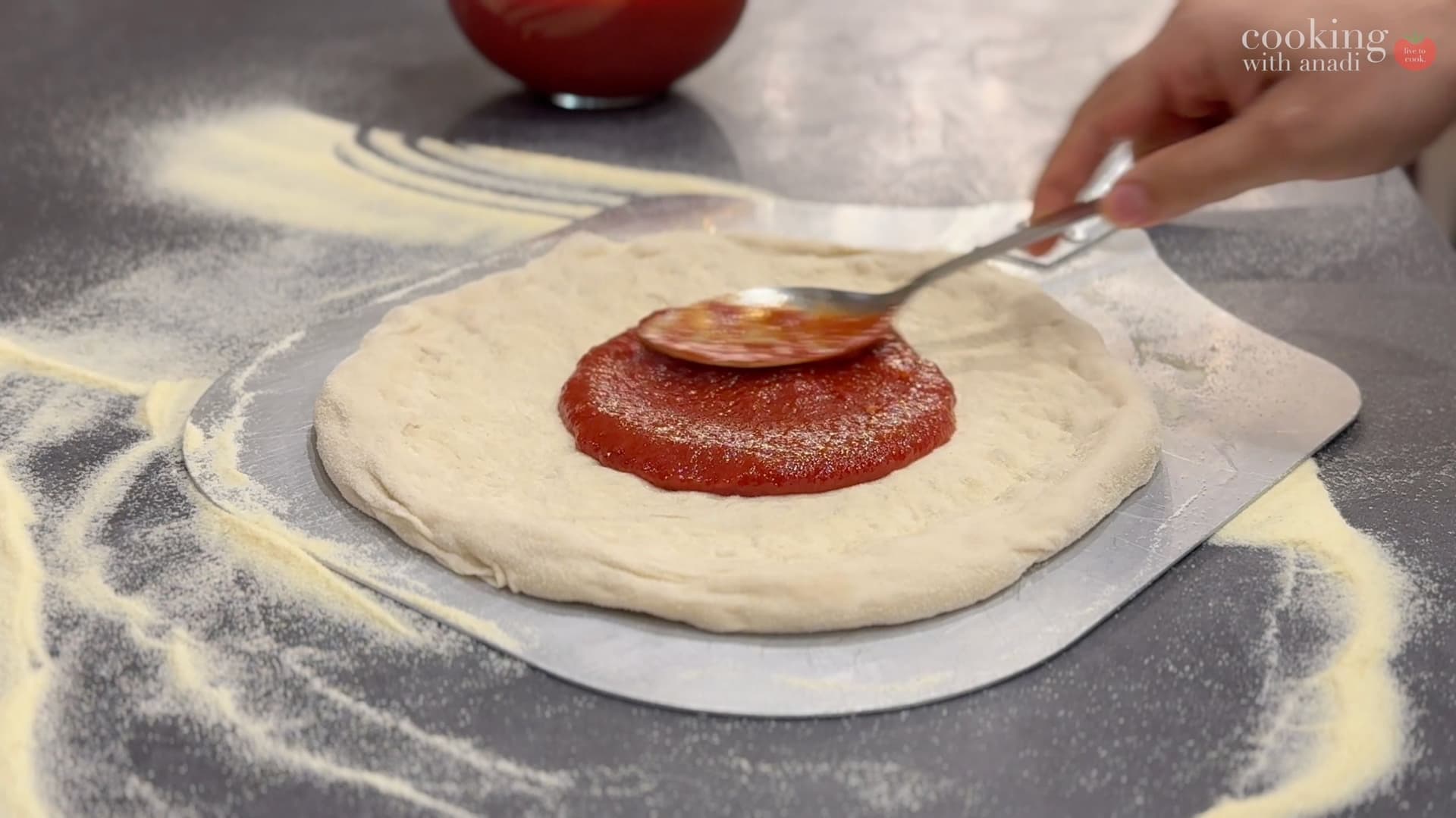
Quick & Easy No-Cook Italian Pizza Sauce Recipe
Make the best no-cook Italian pizza sauce in minutes! Fresh, bold, and effortlessly simple — no simmering needed. Perfect for pizza night or a quick pasta dinner anytime.
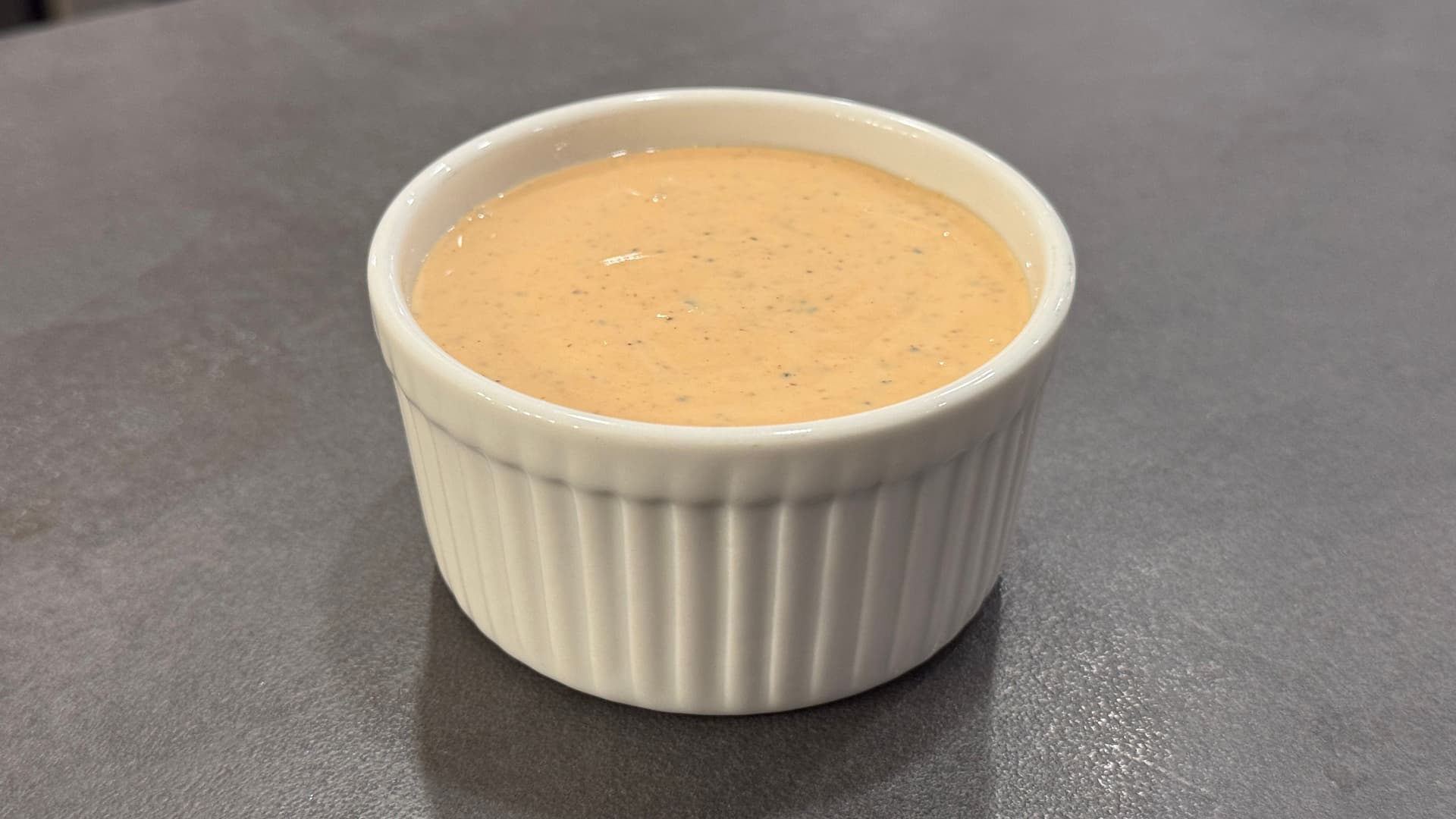
Elevate Your Burgers with This Classic Burger Sauce
Make the ultimate classic burger sauce at home in minutes. Creamy, tangy, and packed with flavor, this easy recipe takes your burgers to the next level every time.

Unleash Bold Flavors with Homemade Cajun Seasoning
Make bold, smoky Cajun seasoning at home in minutes with simple pantry spices. This easy recipe delivers authentic Southern flavor perfect for any dish.

Spice up Your Cooking with This Blackening Spice Recipe
Make your own homemade blackening spice in minutes with simple pantry staples. Bold, smoky, and perfectly balanced, this easy blackened seasoning recipe will transform any dish.
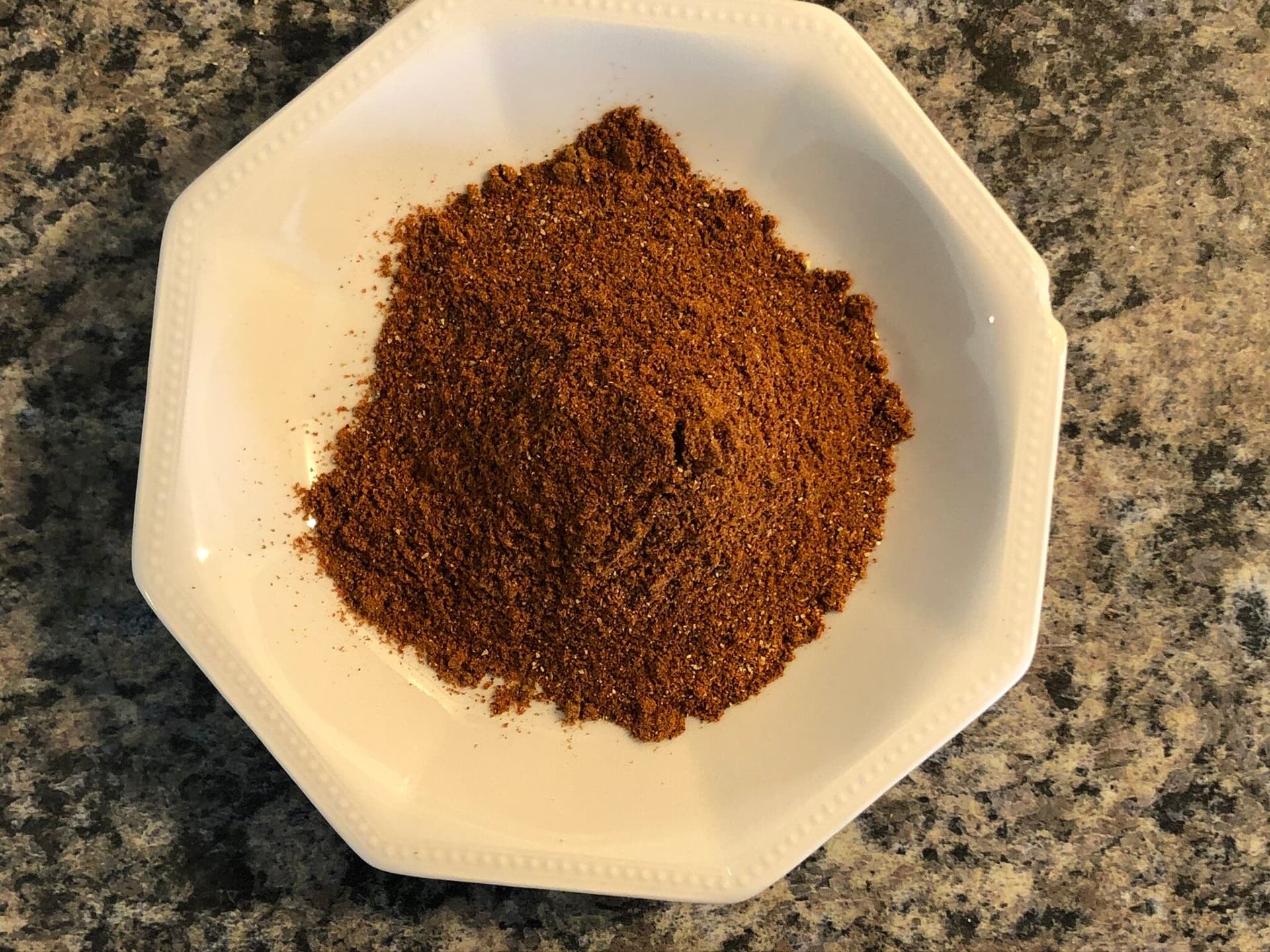
Excellent Quick and Easy Homemade Taco Seasoning
Make the best homemade taco seasoning in minutes with simple pantry spices. This quick and easy recipe beats store-bought every time and works perfectly for any taco night.


1 comment
Incredible sauce to eat with fries
Leave a review
Join 1 cook who've shared a note here.