


This post may contain affiliate links. Read our disclosure policy
Watch the recipe

Salmon. I love it but I don’t eat it often to be totally honest with you.
If you’re new here, I’m from North India, and in North India seafood is not really consumed in abundance. The amount of seafood I had been exposed to back in New Delhi was a big fat zero. My immediate family is all vegetarian with the exception of my sister and myself, and when we went to restaurants when we were going to eat non-vegetarian items, we’d be picking the Chicken Tikkas for appetizers and Butter Chicken or Chicken Tikka Masala as a main!
Regions of South India are closer to the ocean, which is why if you see seafood dishes on a menu at an Indian restaurant, they’re almost sure to be South Indian inspired, as the consumption of seafood is greater there. I literally did not eat fish until I arrived in Canada.
I do have a North Indian-inspired salmon recipe, which is Tandoori Grilled Salmon, inspired by elements of Tandoori Chicken Tikka. However, I’ve never shared a salmon curry recipe!
If you follow me on YouTube, you know that I’ve been hosting an open YouTube collaboration throughout the month of August 2021 called #mycookingjourney2021. This collab is in honor of India’s 75th Independence Day on August 15th, and my objective for this collaboration is to have home cooks who have never delved into the exciting world of Indian cooking brush aside the excuses and finally get in the kitchen and start creating! But it’s not just for newbies! On the other hand, if you know Indian food like the back of your hand, then I encouraged you to create some new extravagant fusion recipes! I took on the challenge too, and it’s been so much fun! I’ve made some new fusion recipes, and I really have been perfecting some classic recipes that I never gave much thought to have. I’ve learned so much along the way too!
So what have I not focused on yet? I’ve done chicken recipes, vegetarian recipes… I have yet to share seafood! Ooou if you’ve checked out my recent Restaurant-Style Egg Curry recipe, that recipe was brushed aside because I find egg curries boring! I ate so many back in Delhi that I got sick of them. They certainly are delicious, but I find boiled eggs a boring protein if I’m given the option between paneer or chicken! I’d rather pick those over eggs! Ultimately, I finally made the egg curry and was so happy I did! You gotta check that one out!
What’s the deal with fish curries? Again, while I love salmon - and I’ve even made some delicious white fish curries before! - chicken and paneer are my comfort zone protein sources. I’ll always jump in and make a chicken curry, but it’s a rare occasion I’ll think of having a fish curry.
Enough is enough! Long awaited, here’s a fabulous salmon curry coming your way! I recorded the recipe last night and I was really blown away! This coconut salmon curry was inspired by an incredible curry I recently had at a local Indian restaurant - I’d say the best in my area! This coconut salmon curry will have South Indian inspired flavors, and instead of a cream gravy we’ll be using coconut milk. Yes, this is also my first curry recipe using coconut milk. I’m very biased toward my North Indian roots:) Coconut milk is quite delicious and I really need to give it some love!
If you’re ready to take your tastebuds on one heck of an adventure, then you need to make this coconut salmon curry! It’s perfect for a weeknight meal, so even on a busy night no need to get the takeout - bring this fabulous dish to your kitchen and it’ll be a hit with your family!
Why Make Coconut Salmon Curry Indian-Style?
Despite me not making seafood curries often (as in, once every few months), I’m going to really sell you this coconut salmon curry recipe! As I was cooking this recipe, I’ve compiled a huge list of why you need to be preparing this for dinner tonight! There’s no reason not to have it! Let’s go over why this coconut salmon curry is the perfect meal!
- Minimal ingredients. We’ll use and stick to some basics and really let the salmon shine here!
- Salmon has an abundance of health benefits! Firstly, it’s a fantastic source of protein. Not only does a 3 1/2 ounce (100-gram) serving of salmon contain about 25 grams of protein, but salmon is known for being rich in omega-3 fatty acids. Omega-3 fatty acids are considered “essential,” as the body cannot produce these fats and must be retrieved from diet. We usually tend to eat more omega-6 fatty acids compared to omiega-3’s, so salmon is a perfect way to get that ratio up! As a result, the fatty acids can help protect brain health, reduce inflammation, and may reduce the risk of heart disease. For more health benefits of salmon, be sure to check out this article by Healthline.
- Coconut milk is also very nutritious! For instance, coconut milk contains vitamins C and E, which have antioxidant properties. Furthermore, coconut milk contains phosphorous, magnesium, and potassium, which are essential minerals and electrolytes. Coconut milk is also an excellent fat source, containing anti-inflammatory properties by increasing levels of HDL cholesterol in the body and reducing the LDL cholesterol in the body. This aids in preventing heart disease. For more information about the health benefits of coconut milk, refer to this article by Healthline.
- One-pan meal. Great for a weeknight because you won’t have to clean much after!
- Ready in 30 minutes: This includes a speedy prep too!
- The salmon requires no marination. It cooks right in the gravy!
I should honestly save this list for reference to convince myself to make more salmon curries!
What’s the Best Kind of Salmon for this Coconut Salmon Curry?▼
I didn’t know until recently but there are plenty of different types of salmon! There’s Atlantic salmon, sockeye salmon, King salmon, pink salmon, silver salmon and Chum salmon! To learn about each type of salmon, I recommend this article by The Spruce Eats!
For this recipe, I used wild-caught Atlantic salmon. Salmon is naturally a fatty fish which adds to the creaminess of this coconut milk curry. However, this sauce would also go great with leaner fish like Cod, Haddock, Halibut as well as other fish like Trout. So have a blast and let me know which one you picked.
How Do I Know the Salmon is Cooked?▼
Fish is delicate so the best way to cook it in a sauce is to poach it. This is the best way to ensure it holds its shape and stays juicy. The fish should cook really quickly and the best way to check if it is cooked is to poke it.
If you poke it and it has a similar spring back as what you feel when you poke the tip of your nose, the fish is ready!
Tips to Master This Easy Salmon Curry
- Use fresh curry leaves instead of the dried variety for the best flavor.
- If your local grocer only sells curry leaves in a large pack, freeze the extra and use in recipe as needed.
- Purchase the freshest fish you can find for the best flavor.
- Gently simmer and mix the coconut milk with the curry to ensure the fish stays intact.
- Stop cooking the moment the fish is completely cooked.
Tools Needed
Ingredients for Coconut Salmon Curry
Let’s review all the ingredients you’ll need to make this Indian Salmon Curry.
- Salmon: I used wild-caught, Atlantic salmon. Wild-caught fish is usually preferred over farmed fish.
- Onions: Thinly sliced.
- Tomatoes: Diced.
- Green chilies: Finely chopped. You can omit if you are sensitive to spice.
- Ginger: Grated.
- Garlic: Minced.
- Passata: These are strained tomatoes, available in a can or container. I love this for extra tomato goodness!
- Coconut milk: I used full-fat coconut milk. Feel free to use low fat coconut milk as well!
- Ground spices: I kept the spices at a minimum here. All I used was Kashmiri red chili powder, turmeric, and ground coriander for spice. Of course always add salt to taste!
- Whole spices: We’ll be using mustard seeds and curry leaves.
- Lime juice: A touch to add a bit of zest! You’ll notice this curry is zesty even though there’s no actual lime zest though!
- Cilantro: For garnish!
How to Make Indian Coconut Salmon Curry
- Heat a pan on medium heat and add ghee. Once the ghee is hot add mustard seeds and curry leaves.
- Once the mustard seeds crackle and the leaves are aromatic, add sliced onions, ginger, garlic and green chilies.
- Saute and cook until the onions soften, add a pinch of salt to speed up the cooking process.
- Once the onions are soft, add tomatoes, followed by turmeric, ground coriander and red chili powder. Add a splash of water if the mixture looks dry and mix well. Cook until the tomatoes have softened.
- Add the passata and simmer for 5-8 minutes or until the sauce has thickened. Season with salt at each stage.
- Add the fish and mix well. Simmer with the sauce for 2-3 minutes or until the fish has changed its color.
- Then add coconut milk to the pan and gently mix well to combine. Turn the heat to low and cook until the fish is completely cooked inside. If you poke the fish, it should have a slight spring back, like the tip of your nose.
- Garnish with cilantro and serve hot with lime and your favorite bread or rice dish!
Serving Suggestions for Indian Coconut Salmon Curry
You could serve this salmon with coconut milk curry in so many ways! The possibilities really are endless with your favorite breads or rice dish! Here are some serving suggestions I recommend to make this salmon curry a restaurant-quality meal right at home!
- Tandoori Naan
- Laccha Paratha - “Flaky” Layered Paratha
- Rumali Roti - “Handkerchief” Roti
- Jeera Rice - Cumin-Spiked Rice
- Vegetable Pulao
In the video recipe below, I actually tried a new rice pulao recipe to celebrate the collaboration - trying new things here! I made my first ever onion pulao. Let me know in the comments if you’d like this recipe! This was awesome and went so well with the curry!
Can I make Salmon Curry Ahead of Time?▼
Yes! I had leftovers from making this delicious Coconut Salmon Curry and I’m so glad I did! I relived it for breakfast the next day! Yes, I love having leftovers from dinner for breakfast - meal times are a made up concept! You can certainly make a big batch of this salmon curry and enjoy it for later!
To store this salmon curry, transfer the contents into an airtight container and keep it in the fridge. This salmon curry will stay fresh in the fridge for up to two days. To reheat, you can either heat it in the microwave or over the stove. Because salmon is very delicate, I chose to reheat it over the stove, and I personally wouldn’t microwave it. To store the salmon curry, transfer the contents from the container into a pan, and heat on medium-low heat.
To reheat in the microwave, heat for about 2-3 minutes, giving it a mix at minute-long intervals. Although microwave does make the fish more at risk to disintegrate and flake away, thus ruining the texture of the sauce.
What Makes This Salmon Curry Different from a Thai Coconut Curry
If you have made coconut curry salmon before, there is a good chance it was the Thai version, built on red curry paste and fish sauce. This one is not that dish. There is no red curry paste and no fish sauce anywhere in the ingredient list. The flavor starts by tempering 1 teaspoon of mustard seeds and 6 to 8 curry leaves in 1 tablespoon of hot ghee, and the sauce is built on onion, tomato and just three ground spices: half a teaspoon each of turmeric, ground coriander and Kashmiri mirch. The Kashmiri mirch is what gives the creamy coconut curry sauce its warm orange color without much heat, which is exactly why the two green chilies are marked optional. There is also no broth here. Three quarters of a cup of passata plus 1.5 to 2 cups of coconut milk is the entire liquid.
Tips for the Best Coconut Milk Salmon Curry
Wait for the crackle. Mustard seeds need genuinely hot ghee, and they should pop before the onions go anywhere near the pan. If they sit in warm fat they turn bitter instead of nutty, and the curry leaves will not release their aroma either.
Salt the onions early. A pinch of salt as the sliced onion goes in pulls out water and softens it noticeably faster, which matters when the whole thing is a 30 minute recipe: 5 minutes of prep and 25 minutes of cooking for 2 servings. If the spices look dry and start to catch once the tomatoes go in, a splash of water is the fix, not more ghee.
Half a teaspoon of finely chopped garlic is roughly one large clove of garlic, and the same half teaspoon of ginger is about a half inch piece peeled. Measuring them by the teaspoon rather than by count keeps the balance right, because cloves garlic vary wildly in size.
We do not sear the salmon. There is no pan-searing salmon over medium-high heat in a screaming skillet here, no patting the fish dry with a paper towel first. The 250 to 300 grams of skinned salmon is cut into 2 inch cubes from the fillet and poached gently in the sauce: 2 to 3 minutes in the passata until the color changes, then the coconut milk goes in and the heat drops to low. That is why it stays soft rather than firm and flaky. If you prefer a seared crust, sear the cubes separately and stir them back in at the very end so they do not overcook.
The doneness cue is touch, not time. Poke a piece of fish and it should give a slight spring back, like the tip of your nose. Softer than that and it needs another minute on low; firmer and it has gone past. Finish with a sprinkle of fresh cilantro and a squeeze of lime just before serving, because fresh herbs added off the heat stay green and fragrant.
Easy Swaps, Add-Ins and What to Serve With It
Fish. Swordfish or halibut both work if salmon fillets are not what you have, because both are firm enough to hold their shape once cubed. Ghee. Clarified butter swaps in one for one, and coconut oil keeps it dairy-free with only a mild flavor change. Olive oil will do in a pinch, though it does not take the heat you need to pop mustard seeds as happily as ghee does.
Spices and aromatics. No mustard seeds? Half a teaspoon of ground mustard gives you the heat without the pop, and celery seeds give you the texture with less bite. Dried curry leaves work at double the quantity, or use fresh bay leaves and pull them out before serving. Swap the green chilies for jalapeno if you want it milder, or serrano for about the same heat. A quarter teaspoon of ground ginger stands in for the fresh.
Add-ins. This recipe is just fish, onion and tomato, but there is room for veggies if you want them. Broccoli or cauliflower florets, or sliced red bell peppers, can go in with the passata and simmer for a few minutes before the fish does. If your tomatoes taste sharp, a teaspoon of honey or brown sugar rounds the sauce out, though it is worth tasting before you reach for either. A crack of black pepper at the table is never wrong.
Serving. It goes best with something to mop up the sauce: naan, jeera rice or plain jasmine rice all work, and quinoa turns it into a higher-protein bowl. Each serving comes in at 458 calories with 29 grams of protein, 31 grams of fat and 20 grams of carbs, and the recipe makes two. Curry leaves and Kashmiri mirch are the two things you may not find at regular grocery stores; any Indian grocer will have both, and both keep well.
Loved This Coconut Milk Salmon Curry? Try These Other Indian Curry Recipes!
Let me know what you think of this recipe in the comments! If you’ve tried this recipe, be sure to post it on social media and tag it with #cookingwithanadi and mention me @cooking.with.anadi. Thank you!
Recipe by Anadi Misra
Creamy, bold, and ready in one pan — this salmon coconut curry brings South Indian flavors to your table fast. Perfect for a satisfying lunch or dinner any night of the week.
One-pot
Rate this recipe ✦
5 min
Prep
25 min
Cook
30 min
Total
2
servings
easy
Level
Ingredients
Ingredients
Tap any quantity to scale
Salmon
- (250 g) salmon(skinned and cut into 2 inch cubes)
Whole spices & aromatics
- (15 ml) ghee · make your ownShop →
- (3 g) mustard seedsShop →
- curry leavesShop →
- medium onion(sliced thin)
- (1 g) ginger(finely chopped)
- (1 g) garlic(finely chopped)
- green chilies(finely chopped; optional)
- small tomatoes(diced)Shop →
Instructions
- 1
Heat a pan on medium heat and add ghee. Once the ghee is hot add mustard seeds and curry leaves.
Heat a pan on medium heat and add ghee. Once the ghee is hot add mustard seeds and curry leaves.
Learn the technique - 2
Once the mustard seeds crackle and the leaves are aromatic, add sliced onions, ginger, garlic and green chilies.
Once the mustard seeds crackle and the leaves are aromatic, add sliced onions, ginger, garlic and green chilies.
- 3
Saute and cook until the onions soften, add a pinch of salt to speed up the cooking process.
Saute and cook until the onions soften, add a pinch of salt to speed up the cooking process.
- 4
Once the onions are soft, add tomatoes, followed by turmeric, ground coriander and red chili powder. Add a splash of water if the mixture looks dry and mix well. Cook until the tomatoes have softened.
Once the onions are soft, add tomatoes, followed by turmeric, ground coriander and red chili powder. Add a splash of water if the mixture looks dry and mix well. Cook until the tomatoes have softened.
- 5
Add the passata and simmer for 5-8 minutes or until the sauce has thickened. Season with salt at each stage.
Add the passata and simmer for 5-8 minutes or until the sauce has thickened. Season with salt at each stage.
- 6
Add the fish and mix well. Simmer with the sauce for 2-3 minutes or until the fish has changed its color.
Add the fish and mix well. Simmer with the sauce for 2-3 minutes or until the fish has changed its color.
- 7
Then add coconut milk to the pan and gently mix well to combine. Turn the heat to low and cook until the fish is completely cooked inside. If you poke the fish, it should have a slight spring back, like the tip of your nose.
Then add coconut milk to the pan and gently mix well to combine. Turn the heat to low and cook until the fish is completely cooked inside. If you poke the fish, it should have a slight spring back, like the tip of your nose.
- 8
Garnish with cilantro and serve hot with lime and your favorite bread or rice dish!
Garnish with cilantro and serve hot with lime and your favorite bread or rice dish!
Did you make this recipe? Tag @cooking.with.anadi on Instagram and hashtag it #cookingwithanadi

Tested & written in Anadi’s kitchen
Recipe history
- April 16, 2026 — Reworked and refreshed for the 2026 relaunch — new photography, restructured and standardized ingredients & instructions.
Filed under
You might also like

Indian-Inspired Shrimp Orzo Curry
Fragrant, creamy, and ready in one pan — this Indian-Inspired Shrimp Orzo Curry combines bold spices with tender orzo for a satisfying weeknight dinner the whole family will love.
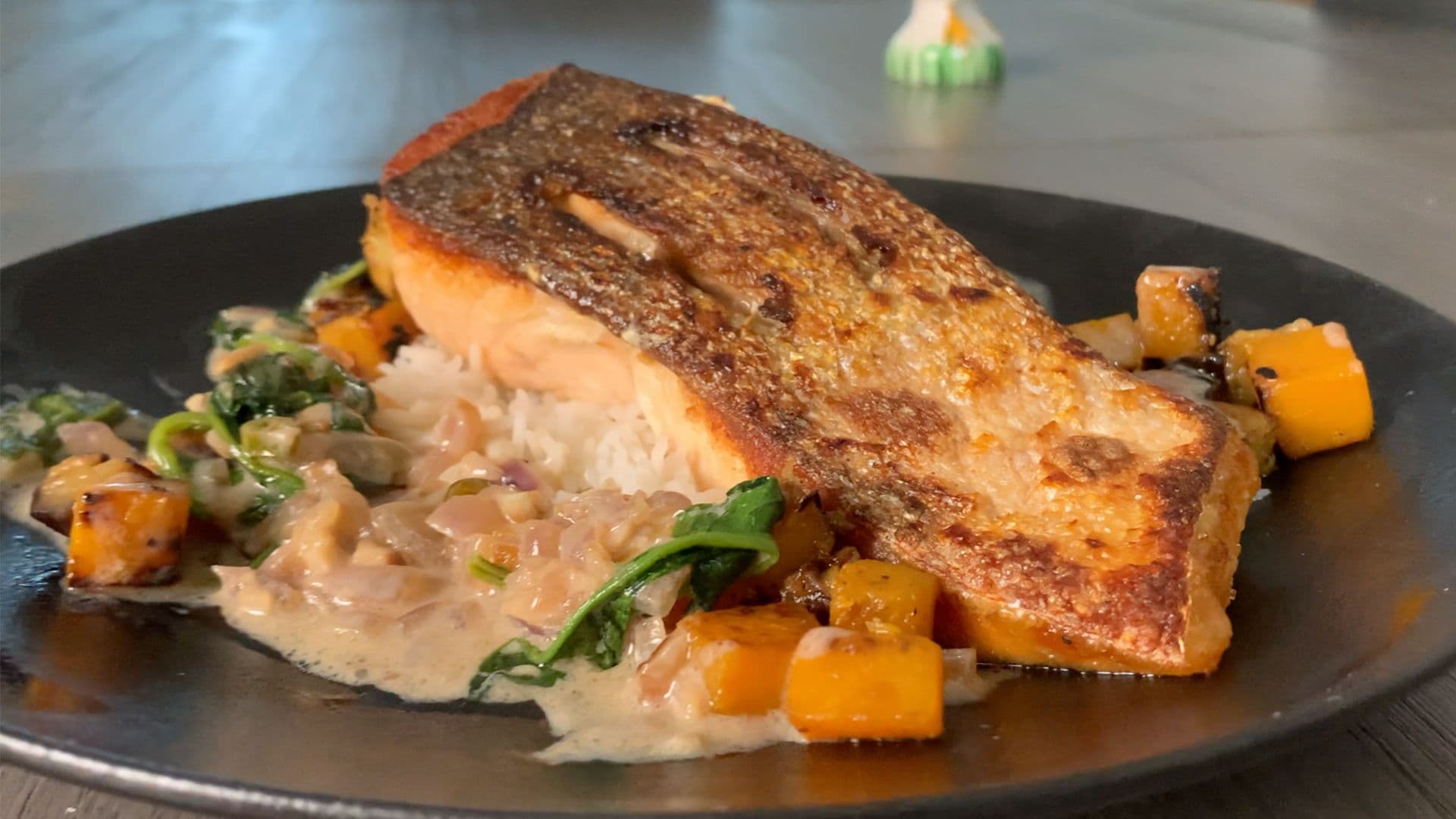
Ginataang Salmon (Filipino Salmon in Coconut Milk)
Ginataang Salmon is a rich, creamy Filipino dish simmered in coconut milk. Ready in under 30 minutes, it makes the perfect comforting lunch or dinner the whole family will love.
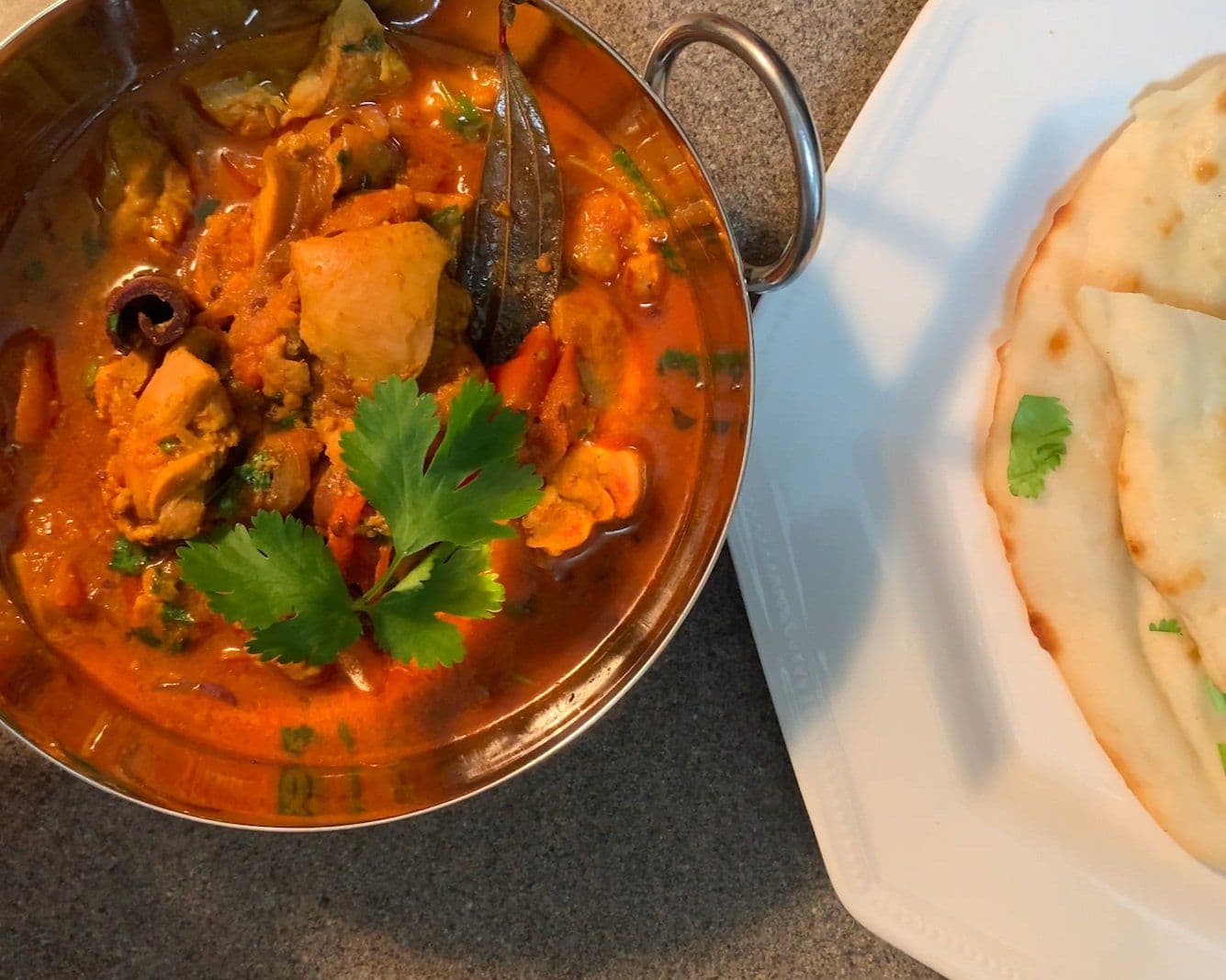
Mouthwatering Homestyle Chicken Curry Recipe
Craving authentic Indian chicken curry? Our homestyle recipe delivers rich, aromatic flavors in every bite. Perfect for lunch or dinner, it brings true North Indian taste to your table.

Indulge in This Royal Chicken Kofta Curry Recipe
Discover a royal Chicken Kofta Curry bursting with bold Indian spices. Juicy chicken meatballs simmered in a rich, aromatic gravy make this the ultimate dinner worth savoring.

Tandoori Grilled Salmon | Indian Style Tandoori Salmon
Juicy, smoky tandoori grilled salmon marinated in bold Indian spices. A restaurant-quality recipe made at home, served with cool cucumber raita and jeera rice. Your new favorite weeknight dinner.

Authentic Slow Cooked Chicken Tikka Masala
Rich, creamy, and packed with bold spices, this Authentic Chicken Tikka Masala is slow cooked to perfection in your Instant Pot. A classic Indian dinner made easy in one pot.


2 comments
Hello, I am wondering if the mustard seeds in this recipe should be black? Thank you! ;)
Hello Suzanne! Thanks for your comment, sorry I was a little late! Yes black mustard seeds are best! Let me know if you have any other questions!
Leave a review
Join 2 cooks who've shared notes here.