


This post may contain affiliate links. Read our disclosure policy
Watch the recipe

If you’re subscribed to me on YouTube, then you know for the month of October I’ve been celebrating the goodness of pumpkins with plenty of pumpkin recipes! Ranging from my favorite potato and pumpkin curry Aloo Kohra to a Pumpkin Spice Latte, I’ve really made more pumpkin so far this month than I probably have in my entire life! I have to admit I’ve never been so excited to have pumpkin before, and I actually had to really squeeze in time to make all of the pumpkin recipes I wanted to share for the month! I got super inspired! If you need some motivation in the kitchen then I encourage you to check out my free guide 5 Tips To Make Cooking Fun! I go over in more details how using up what you have and having a theme can spark creativity in the kitchen and you’ll make dishes you never thought you could do before! Also, this Pumpkin Puree from Scratch recipe will yield a fair amount, so you won’t run out of ideas to use up this puree! If you’re scratching your head on what to make, then check out the bottom of this post for lots of recipe inspiration!
If you had purchased some pumpkins as decorations for Halloween this year, then multipurpose them after and use them in puree! In addition, perhaps you’ve always wanted to try making a pumpkin pie or pumpkin cheesecake, and you were curious to make it all from scratch. Having your own pumpkin puree will help you do that! If any pumpkin recipe has been on your bucket list for a while, use this pumpkin puree recipe to achieve that as part of your Live to Cook one-month challenge! Check out my free guides by signing up for the newsletter, and if you’ve made your own pumpkin puree in a recipe don’t forget to share it by tagging me on Instagram! I love to see what you’ve made! Let’s get cooking!
What is Pumpkin Puree?▼
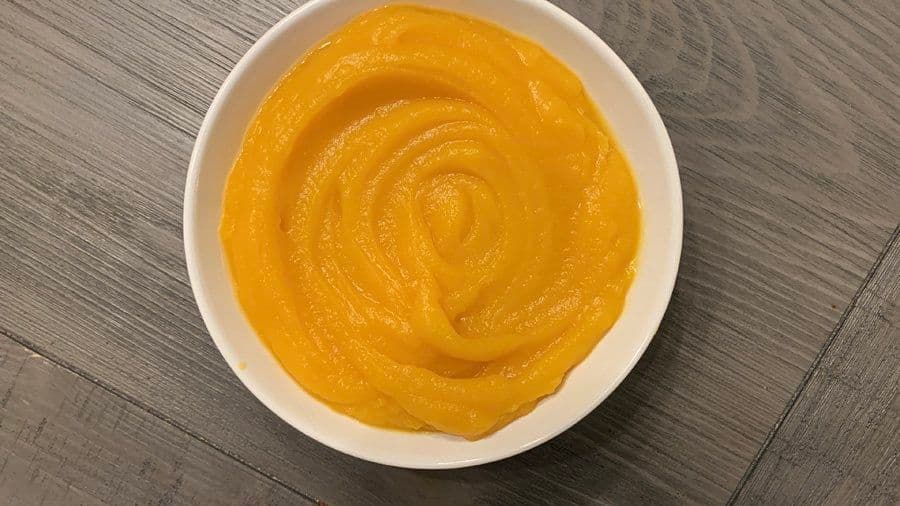
Pumpkin puree is exactly that: Pureed pumpkins! It consists of the flesh that has been cooked, then blended into a smooth mix. When you purchase pumpkin puree in the can, it should say 100% pumpkin as the only ingredient. Keep in mind that Pumpkin puree is NOT the same as pumpkin pie filling! You want to use pumpkin puree in all recipes calling for pumpkin. Pumpkin puree has no sweeteners or anything else added, whereas the pumpkin pie filling contains spices, sugar, and water. The purpose of pumpkin pie filling is as the name suggests - to use it directly into a pie so you don’t have to sweeten it yourself. However, it’s not customizable whereas pumpkin puree is. You can use pumpkin puree in desserts, drinks, pasta, and risotto! You cannot do that with pumpkin pie filling! If you’ve purchased pumpkin pie filling by mistake, either make a pie soon or give it as a gift or exchange it at the store (hopefully you’ve kept the receipt!). On the other hand, if you’ve purchased pumpkin puree, the possibilities are endless!
Is Pumpkin Puree the same as canned pumpkin?▼
Yes, they mean the same thing! When a recipe calls for “pumpkin puree,” it usually refers to canned pumpkin puree. There is no difference at all, so don’t be confused!
Can I Use Fresh Pumpkin Puree Instead of canned?▼
Whenever a recipe calls for pumpkin puree, you can definitely use your own! In fact, it may make your final dish even more delicious than if you were to use the canned pumpkin puree! It’s all the same thing!
Why Make Your Own Pumpkin Puree?
- Minimal steps: You just gotta cut, deseed, roast, peel and blend to get pumpkin puree at home! This entire procedure shouldn’t take too long and it will be easy to follow!
- Delicious: I’ve found that this pumpkin puree from scratch was absolutely so tasty! You’ll taste the difference for sure!
- Make-ahead friendly: You can make your pumpkin puree and easily portion it out and freeze it, so you’ll always have it on hand!
- Cost-effective: Pumpkins are actually quite cheap, and even if you use a small pumpkin, this will make a lot of puree! An 800 mL can costs $7 CAD, whereas for me two small pumpkins only cost $2.50 CAD, and from just one small pumpkin I got about as much puree as from the can!
- No waste: Got pumpkins that you’ve decorated? If they’re not only for decoration, then you can use them up to make puree! If you keep the seeds, they make for an excellent snack too!
Is it worth it to make your own pumpkin puree?▼
Depends on you! After doing this for the first time, I believe it is! All of the points mentioned above are convincing for me, especially the cost. If you were to plan to make a recipe calling for pumpkin last-minute, then unfortunately making your own puree will take a lot of time and it will delay you, especially if you have a dinner party where you need to make a pumpkin pie. However, if you’ve carved out some time (no pun intended!) to prepare this puree, then it’s really really worth it! For many recipes, making the puree would probably be the longest step. Once you have it, it’s just mixing pumpkin puree with other ingredients for whatever you need! Personally I really enjoyed making my own pumpkin puree, and I loved the taste of it. I made it for the first time when writing this recipe and I plan on doing it again later this week! Honestly, this helped spark my excitement for pumpkin because I’ve found the homemade pumpkin much more delicious!
What Type of Pumpkin Should I Use?▼
Did you know that there are over 100 types of pumpkins? I honestly didn’t realize that until now! While they certainly aren’t all created equally, you can’t eat all of them too.
The pumpkin I’ve used here is called a small sugar pumpkin. They range from 5 to 8 pounds and are about 10 inches in diameter. While you may be tempted to use the big pumpkins you get at the pumpkin patches, the flesh is not the tastiest.
You want sweet and starchy pumpkins to make a pumpkin puree. If you’ve used a pumpkin that produces a watery puree, you’ll need to strain the excess moisture with a cheesecloth. I didn’t find the need to do that!
Here are my recommendations:
- Blue pumpkins: Blue doll, Blue Hubbard, and Blue Jarrahdale are excellent for making pumpkin puree! The orange flesh makes them excellent for pies.
- Cinderella: They are also referred to as Rouge Vif d’Etampes. They are given the name “Cinderella” because these pumpkins look like Cinderella’s pumpkin carriage. The moist flesh makes these pumpkins perfect to puree for pies.
- Dickinson Pumpkin: These are the pumpkins that are used in the canned pumpkins at grocery stores. They range from 10 to 40 pounds with a slightly round but elongated shape. They are about 18 inches long and 14 inches in diameter with a pale orange color.
- Fairytale: Similar to the Cinderella pumpkins but slightly larger. These pumpkins contain sweet flesh perfect for pies and curries. They are a vibrant orange color on the outside and have a deep orange flesh.
- Jack-o-Lantern: These are the typical large pumpkins you see at stores when fall rolls around. You can carve and cook them. They are medium-sized and slightly oblong-shaped.
- Jarrahdale: These are an Australian variety of pies, the ribbed blue-gray pumpkins are super sweet and are amazing for pies!
- Kabocha pumpkins: A Japanese type of pumpkin, they have a dark green skin and a firm yellow flesh that’s sweet. These are also common in India and Australia.
- Long Island cheese: A perfect option for pies. They are pale orange in color, and the name comes from the pumpkins resembling a large cheese wheel!
To learn more about pumpkin varieties, check out this list.
Color & Texture Differences of Pumpkin Puree
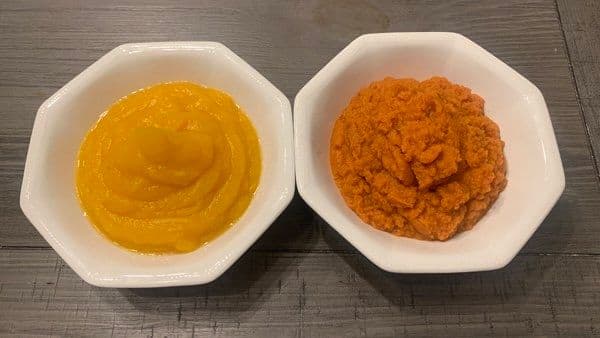
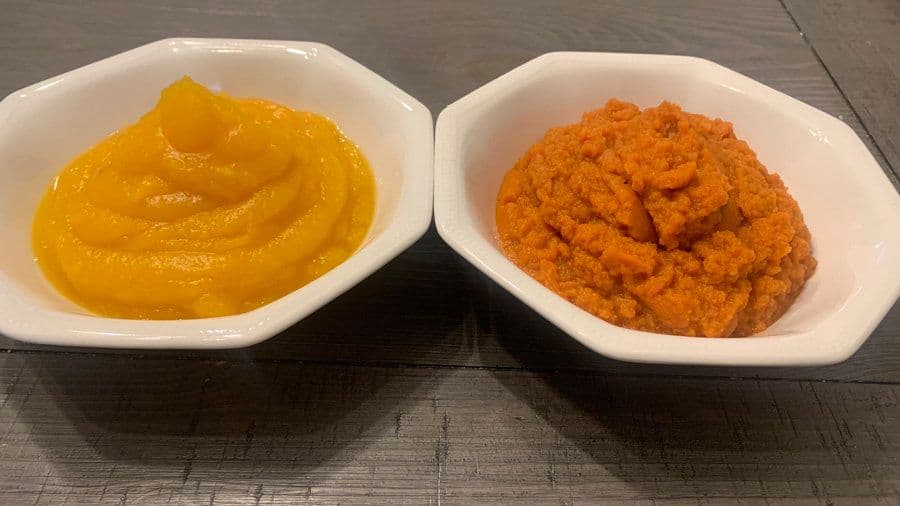
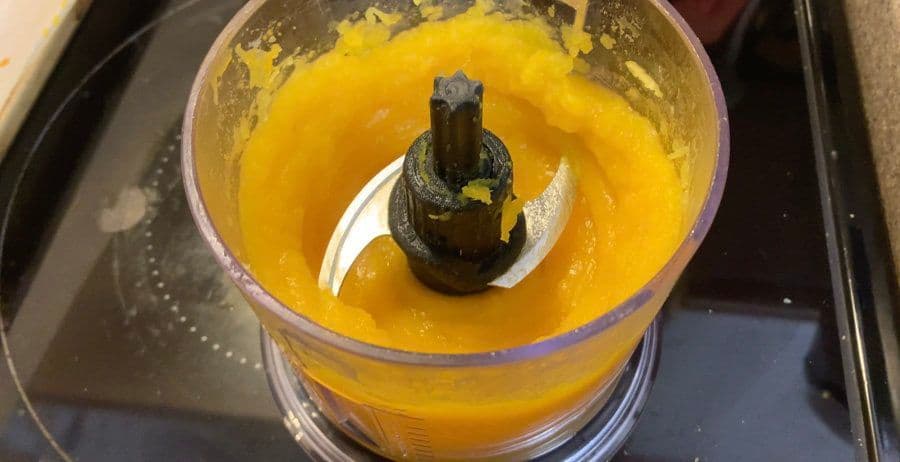
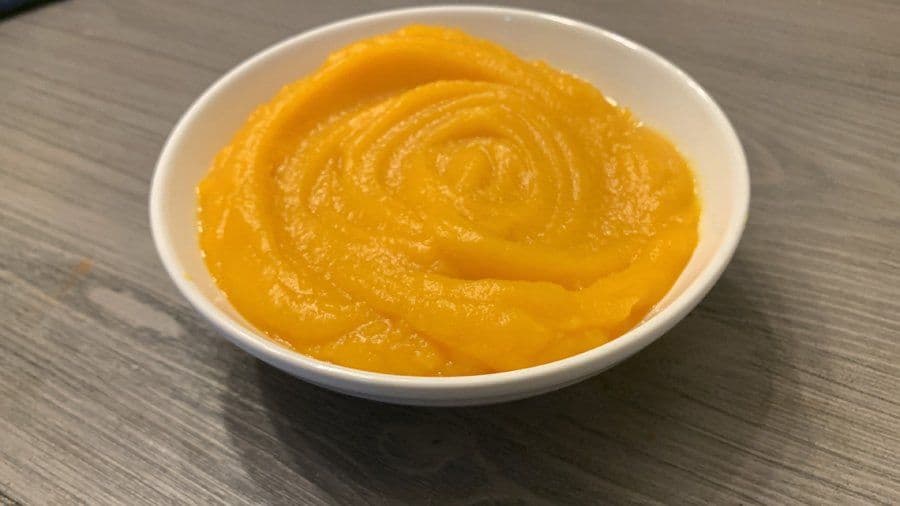
If you’ve used canned pumpkin in the past, you know it’s a very deep orange color. However, you’ll see that our homemade pumpkin puree is much paler - it is a yellow-orange. Additionally, you’ll notice the textures are different too. The homemade pumpkin puree is much smoother and it’s not chunky compared to the store-bought pumpkin puree; the texture of the pumpkin puree from scratch looks like baby food or a jelly.
This is normal, and it’s because of the flesh of the pumpkin! When using your pumpkin puree from scratch, the color of your food and baked goods will be significantly paler. Depending on what color you are looking for - whether deep orange or a paler color - keep this in mind when picking the pumpkin to make your puree with!

Equipment Needed for Homemade Pumpkin Puree
Ingredients for Pumpkin Puree
- Fresh pumpkin: This is all you’ll need! Our pumpkin puree really just comes from blended up pumpkin. You can use a small, dense pumpkin of your choice from the list above. Pumpkins that will be in season will of course be the tastiest!
How to Make Pumpkin Puree From Scratch
Refer to the FULL PRINTABLE recipe card at the bottom of this post for complete instructions and to save the recipe for later!
Preheat oven to 400 F and prepare a baking sheet with parchment paper
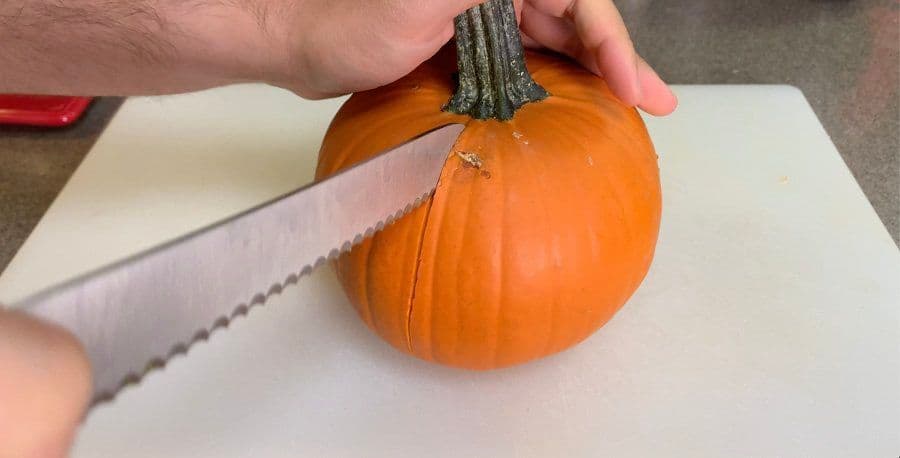
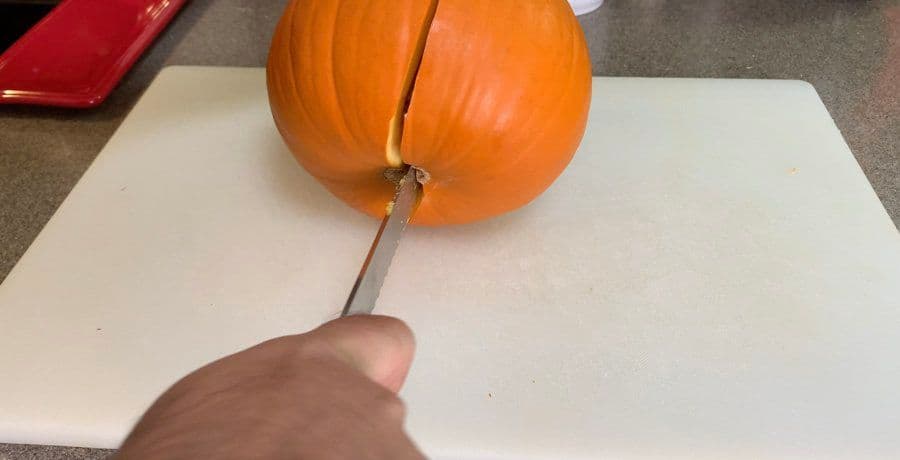
Cut the pumpkin in half around the stem. Pull apart the pumpkin in half.
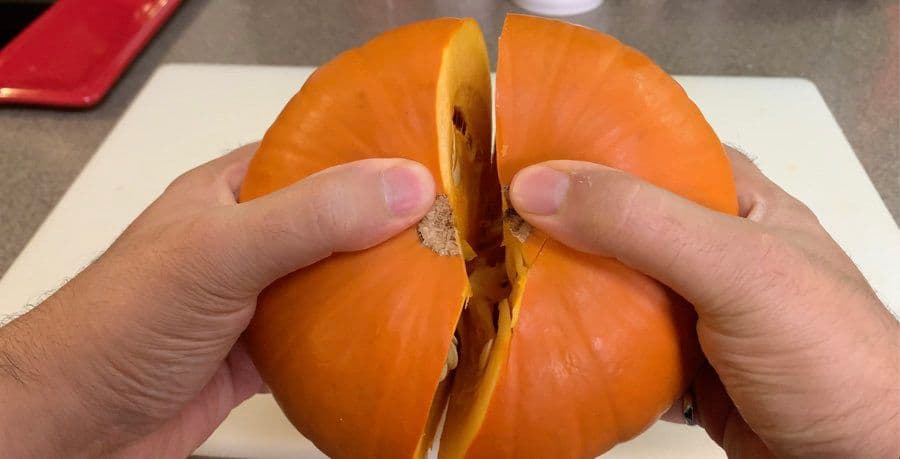
Then remove any seeds or fibers with the help of a spoon.
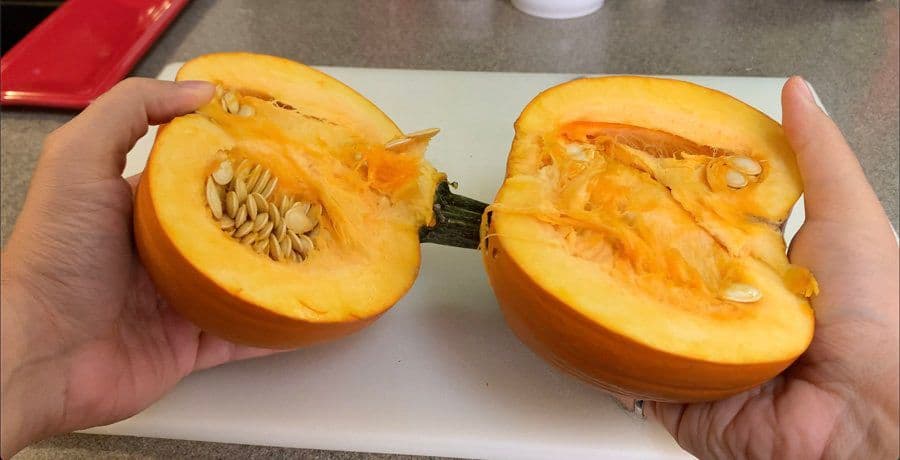

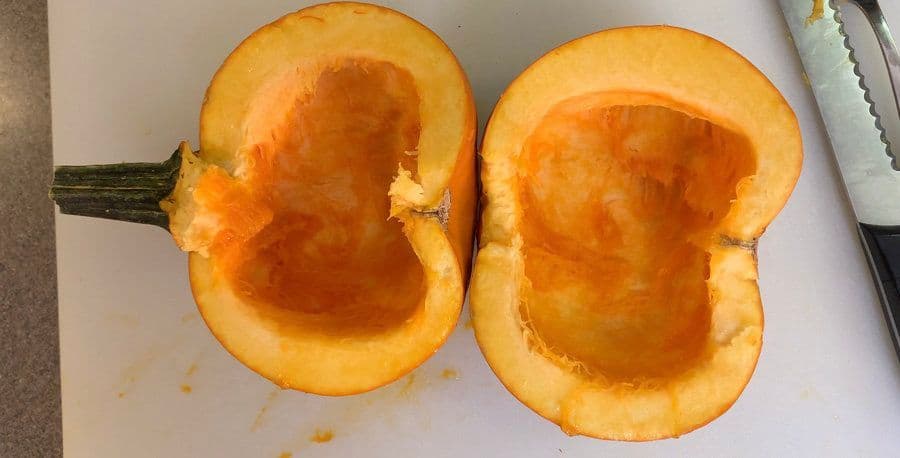
Place the pumpkin flesh side down on the baking sheet and bake for 40-50 minutes.


Once the pumpkin is soft and fork-tender, peel the skin and discard. Let the pumpkin cooldown for 10-15 minutes.


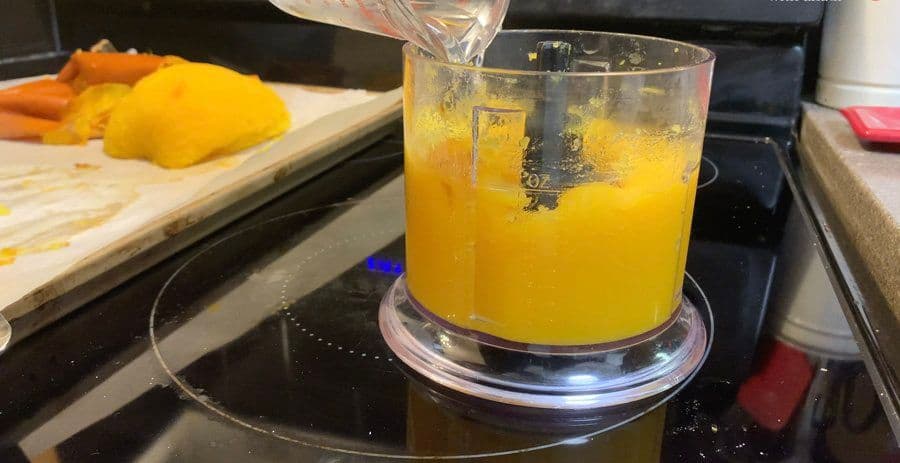
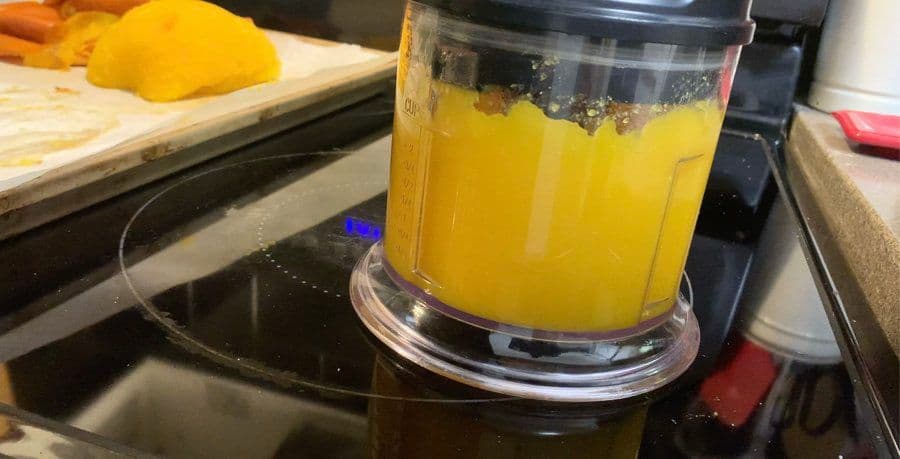
Add the pumpkin to a food processor and add a couple splashes of water. Puree until thick and smooth. Add more water in small amounts as needed to puree the pumpkin.

Enjoy in your favorite pumpkin recipes!
Tips to Make Pumpkin Puree Easily!
- Using a solid bread knife or serrated knife can make your life easier to slice through the pumpkin.
- Before slicing in half, make sure your pumpkin can remain stable and steady on your work surface.
- Once done cooking, the pumpkin should be fork tender and the peel should be able to come off with ease.
- Add water little bit at a time while pureeing, you need just the minimum amount required to create the puree.
Can I can pumpkin puree?▼
No, it is highly recommended that you do not can pumpkin puree. Despite being acidic, according to the USDA, pumpkin puree is not acidic enough to can. Additionally should pumpkin butter, mashed pumpkin and winter squash should not be canned. You can only can pumpkin or winter squash that are cubed with the flesh on. There is a very specific process for this, so read more about canning pumpkins here if you’re interested.
How much pumpkin puree will a pumpkin yield?▼
One 2 pound sugar pumpkin should yield around 2 to 2 1/2 Cups of puree.
Storage & Freezing Instructions
To Store
You can store your Homemade Pumpkin Puree in the refrigerator in an airtight container for up to a week.
To Freeze
Freeze the pumpkin puree in an airtight container. It will last for about 5 to 8 months, depending on how fresh your pumpkin was when you made the puree. To thaw, place in the refrigerator overnight.
You can also freeze pumpkin puree in ice cube trays if you want to use the puree for smoothies or iced lattes! Simply transfer the puree into an ice cube tray and place in the freezer. When it has completely frozen, you can add the ice cubes into a freezer bag so that your ice cube trays aren’t reserved! Seal the bag tightly, ensuring you’ve removed as much air as possible. When you’re ready to make your drink, simply plop the pumpkin puree ice cubes in!
Recipes to Use Your Pumpkin Puree!
- Homemade Pumpkin Spice Syrup
- Pumpkin Banana Bread Pudding
- Skillet Protein Chocolate Chip Cookie
- Protein Packed Edible Pumpkin Cookie Dough
- Protein S’mores Dessert Pizza
- Pumpkin Puree Stove-top Oats
- Healthy & Easy Protein Pumpkin Oatmeal
- Pumpkin Spice Latte Cupcakes
- Pumpkin Pie Cinnamon Roll Pancakes
Which Pumpkin to Use: Smaller Pumpkins, Jack-o-Lantern Pumpkins and Butternut
The recipe calls for 2 lb of pumpkin and nothing else, so the pumpkin you pick is doing all of the work. Smaller pumpkins are what you want, and they are usually sold as pie pumpkins or sugar pumpkins. A small, dense squash has thicker walls and a lower water content, which is exactly what produces a fresh pumpkin puree that is thick rather than watery. Jack-o-lantern pumpkins are a different proposition. They are bred for size and for a hollow shell you can carve, and the flesh is correspondingly thin, stringy and full of water. You can absolutely use one, and if you have carved pumpkins sitting on the porch that never got cut into, using them up beats throwing them out, but expect a paler and looser puree and expect to spend longer roasting it. Butternut squash is the other honest substitute, with a similar sweetness and texture, and it is easier to peel than most pumpkins.
Roasting, Scooping the Pumpkin Seeds, and Dealing with Excess Water
Preheat the oven to 400 F and line a baking tray with parchment paper. Cut the pumpkin in half around the stem and pull the halves apart, then scoop out the seeds and the stringy fibers with a spoon. Do not throw the pumpkin seeds away. Rinse them, dry them properly, toss them with a little oil and roast them while the pumpkin is already in the oven, and you get a second thing out of the same squash for no extra effort. The halves go flesh side down on the tray for 40 to 50 minutes; face down means the steam is trapped against the sheet and the flesh cooks softer. When it is fork-tender, the skin peels off with almost no resistance, which is the easiest sign that it is done. Let it cool for 10 to 15 minutes before it goes anywhere near a blade.
Then it goes into a food processor with a couple of splashes of water, and this is the step where most homemade puree goes wrong. Add the water in small amounts, only as much as the machine needs to keep moving, because roasted pumpkin has already given up a lot of its own liquid and any excess water you add on top has to be cooked out again later in whatever you are baking. If the finished puree looks loose, tip it into a fine sieve set over a bowl and let it drain for twenty minutes. A potato masher is a perfectly good alternative to the processor if you want a slightly rustic, chunkier texture, though it will not get you the smooth canned-style consistency. There is no salt anywhere in this recipe, and that is deliberate: this is a base ingredient headed for pumpkin bread as readily as for a soup, so the seasoning belongs in whatever you make next, not in the jar.
Storing a Batch: The Fridge, Zip-Top Bags, and What to Make With It
One batch from a 2 lb pumpkin goes further than a can does, which is the whole argument for making it. Keep it in the fridge in an airtight container for up to a week. For longer than that, freeze it, where it holds for roughly five to eight months depending on how fresh the pumpkin was to begin with. Zip-top bags are worth using here in preference to tubs: portion the puree out, press each bag flat, and stack them, because flat bags freeze faster, thaw faster and take up a fraction of the space. Freeze a tray of cubes as well if you use puree in smoothies or iced lattes. It is also worth portioning by the cupful of pumpkin that most recipes ask for, so you are thawing what you need instead of a solid block.
As for what to do with it, the puree is a straight swap for canned in almost anything, allowing for the paler color. Pumpkin bread and pumpkin muffins are the obvious places to start, pumpkin pancakes will happily take a few spoonfuls stirred into the batter, and it thickens soups beautifully, particularly anything with squash, carrot or a bit of warm spice in it. Bear in mind that homemade puree can be slightly wetter than canned, so if a baking recipe comes out looser than you expected, drain the next batch a little harder before you use it.
If you liked this recipe please let me know in the comments. Tag your post on social media using #cookingwithanadi and mention me @cooking.with.anadi. Thank you!
Recipe by Anadi Misra
Make homemade pumpkin puree from scratch with fresh pumpkin for the creamiest pies and recipes. Simple steps, pure flavor, and far better than canned.
Stovetop
Rate this recipe ✦
10 min
Prep
45 min
Cook
10 min
Rest
1 hr 5 min
Total
2
12/ cups
easy
Level
Ingredients
Ingredients
Tap any quantity to scale
- (907 g) pumpkin
- water(as needed)
Instructions
- 1
Preheat oven to 400°F and prepare a baking sheet with parchment paper
Preheat oven to 400°F (204°C) and prepare a baking sheet with parchment paper
- 2
Cut the pumpkin in half around the stem. Pull the pumpkin halves apart and then remove any seeds or fibers with the help of a spoon.
Cut the pumpkin in half around the stem. Pull the pumpkin halves apart and then remove any seeds or fibers with the help of a spoon.
- 3
Place the pumpkin flesh side down on the baking sheet and bake for 40-50 minutes. Once the pumpkin is soft and fork-tender, peel the skin and discard. Let the pumpkin cool down for 10-15 minutes.
Place the pumpkin flesh side down on the baking sheet and bake for 40-50 minutes. Once the pumpkin is soft and fork-tender, peel the skin and discard. Let the pumpkin cool down for 10-15 minutes.
- 4
Add the pumpkin to a food processor and add a couple splashes of water. Puree until thick and smooth. Add more water in small amounts as needed to puree the pumpkin.
Add the pumpkin to a food processor and add a couple splashes of water. Puree until thick and smooth. Add more water in small amounts as needed to puree the pumpkin.
Nutrition per 12/ cup
154
Calories
5g
Protein
37g
Carbs
1g
Fat
13g
Fiber
15g
Sugar
25mg
Sodium
Did you make this recipe? Tag @cooking.with.anadi on Instagram and hashtag it #cookingwithanadi

Tested & written in Anadi’s kitchen
Recipe history
- April 16, 2026 — Reworked and refreshed for the 2026 relaunch — new photography, restructured and standardized ingredients & instructions.
Filed under
You might also like
Easy Homemade Pumpkin Pie Spice Blend Recipe
Make your own pumpkin pie spice at home in minutes! This easy homemade blend beats store-bought every time. Perfect for pies, lattes, and fall baking all season long.
Elevate Your Cooking with Homemade Garlic-Infused Oil!
Make flavorful homemade garlic-infused oil safely and easily! Perfect for pasta, bread, and pizza, this simple recipe delivers rich, aromatic results every time.

Spice Up Your Winter with This Simple Apple Pie Spice
Make your own apple pie spice blend in minutes with simple pantry staples. This easy homemade recipe brings warm, cozy flavor to desserts all winter long.

Unleash Bold Flavors with Homemade Cajun Seasoning
Make bold, smoky Cajun seasoning at home in minutes with simple pantry spices. This easy recipe delivers authentic Southern flavor perfect for any dish.

Spice up Your Cooking with This Blackening Spice Recipe
Make your own homemade blackening spice in minutes with simple pantry staples. Bold, smoky, and perfectly balanced, this easy blackened seasoning recipe will transform any dish.
Discover The Aromatic Panch Phoran Recipe
Unlock the secrets of Panch Phoran, the essential Bengali five-spice blend. Quick and easy to make, this aromatic mix transforms everyday dishes with bold, authentic Indian flavor.


Comments
No comments yet — be the first to share your thoughts!
Leave a review
Be the first to share how it went — your note helps other cooks (and earns the recipe its stars).