
crust building
The Crust Is the Flavor: How I Sear Every Burger Patty, Thick or Smashed
Almost all of a burger's flavor lives in its crust — the deep, browned layer that only forms when a loose ball of beef meets ripping-hot cast iron and gets pressed flat. Here's how to build the best crust for the most flavor, thick or smashed.
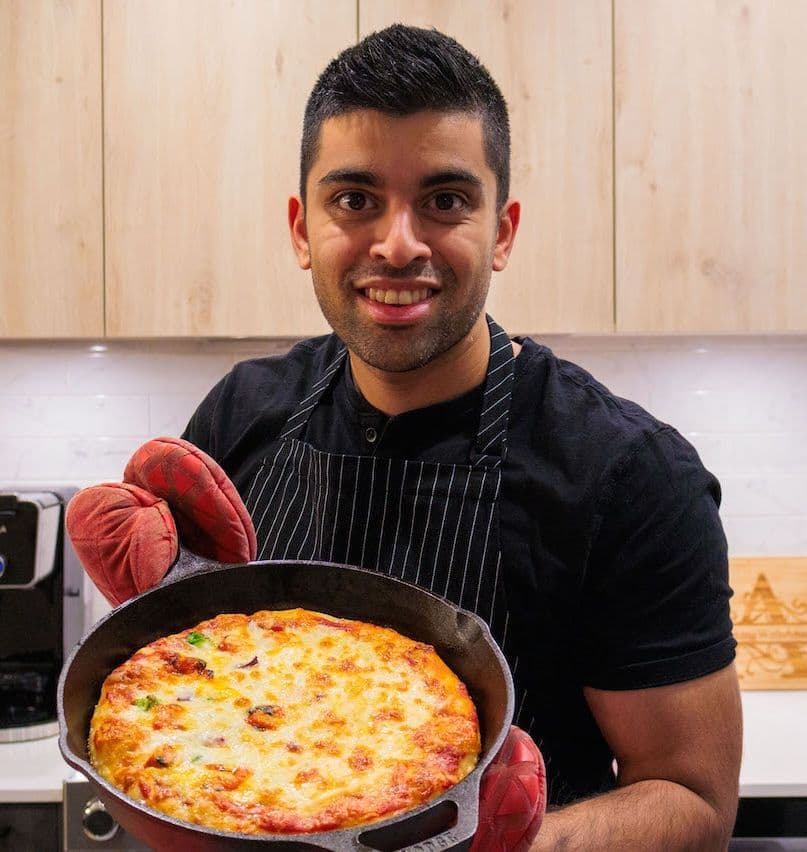
Here's the thing almost nobody tells you about burgers: nearly all of the flavor lives in the crust. Not the grind, not the sauce, not the toppings — the crust. That deep-brown, savory, slightly craggy layer on the outside of the patty is what takes a burger from “fine” to something you actually remember. Most home burgers come out grey and a little flat because they never build one. The good news is that a great crust comes down to a single move — and it's the same move whether you want a fat, juicy diner burger or a thin, lacy smash. The only thing that changes is how hard you press.
Why the crust is the flavor (it's the Maillard reaction)
A burger's flavor lives almost entirely in its crust — that browned, savory layer the Maillard reaction builds when meat hits metal that's hot and dry enough. A patty left to cook gently barely browns; it steams in its own juices and goes grey. Pressing a loose ball flat onto hot iron does two things at once: it maximizes the surface touching the pan, and it forces that surface to brown hard instead of steam. Press a little for a thick patty, press a lot for a smash — either way, the crust is the whole point.
Start with a loose ball, never a packed disc
Weigh out your beef — 6 oz is a good single — and form it into a loose, rough ball that barely holds together. Don't pack it, knead it, or shape a neat patty. Overworked meat turns dense and springy, like a meatball, and it browns unevenly. A loose ball stays tender and, when it hits the pan, spreads with ragged edges that crisp into lace. This step is identical for a thick burger and a smash: handle the meat as little as your hands will allow.
The iron has to be hot — and dry
Cast iron, medium to medium-high, fully preheated. If the surface isn't hot enough the beef sticks and greys instead of searing — a drop of water should skate and vanish on contact. This is a fast, high-heat technique: you're building a crust in minutes, not cooking slowly through. A wet or oily-puddled pan steams the meat, so keep it dry and let the beef's own fat do the work.
The press — this is where thick and thin part ways
Lay the ball down and press it once, firm and decisive, through a square of parchment so nothing sticks to your spatula. This is the one place the two burgers diverge, and it's all in the pressure:
- Thick, juicy diner burger — press gently to about ½ inch and stop. You're after a seared crust wrapped around a soft, moist middle.
- Thin, lacy smash — press hard to ¼ inch or less, and do it in the first 30 seconds before the meat sets. That's what fans the edges into the craggy lace a smash is famous for; wait too long and it won't spread.
Whichever you're making, press only once. The single most common mistake is pressing again “to help it cook.” Every press after the crust starts forming squeezes juice onto the pan and steams away the browning you just built.
The divot — your anti-dome insurance
Right after you press, push a shallow thumb dimple into the center of a thicker patty. As it sears, the middle contracts and wants to bulge into a dome — the thing that makes a burger rock on the bun. The divot gives it somewhere to go, so it cooks up flat. A true thin smash barely domes, so you can skip it there; anything over about ½ inch benefits.
Season late, and flip once
Salt draws moisture to the surface and, given time, firms ground beef into a springy, sausage-y bounce — so season the outside after you press, never mixed into the meat. Sear undisturbed for 4–5 minutes (less for a thin smash) until a deep crust forms and the patty releases itself from the pan. If it's stuck, it isn't done — wait. Flip once, drop the heat slightly, lay the cheese on straight away, and give it a minute or two more. For a full, even melt, cover the pan for the last minute and let the trapped steam do the work.
The two crust-killers
A pan that isn't hot enough (grey, stuck, no browning) and pressing the patty more than once (dry and dense). Get the iron ripping and press exactly once — gently for a thick patty, hard for a smash.
Put it into practice
Now Go Cook It

Juicy Classic American Cheeseburger Recipe
Make the juiciest homemade classic American cheeseburger with our best beef burger recipe. Perfectly seasoned patties, melty cheese, and all the fixings in every bite.

Leftover Thanksgiving Dinner Roll Smash Burger Sliders
Turn leftover Thanksgiving dinner rolls into crispy, juicy smash burger sliders! A genius way to use holiday leftovers for a quick, crowd-pleasing lunch or dinner the whole family will love.

Epic Smash Burger Bacon Patty Melts Recipe
Epic Smash Burger Bacon Patty Melts are crispy, juicy, and packed with flavor. Quick and easy to make, this ultimate sandwich recipe will become your new favorite lunch in no time.

Experience the Sizzle: Fired-Up Bacon Cheeseburger Sliders
Fire up the grill for these Bacon Cheeseburger Sliders with torched, melty cheese. Juicy beef patties, crispy bacon, and bold flavors make the ultimate lunch or dinner crowd-pleaser.
Free guide
7 Quick Dinners
Easy weeknight dinners you'll make on repeat.
40,000 home cooks a month cook from this site. Get one tested recipe a week from it, plus the weeknight tip that makes it work.
Comments
No comments yet — be the first to share your thoughts!
Leave a comment
Be the first to comment.