
flavor balancing
The seasoning chefs reach for that isn't just salt — and it isn't for sweetness
A small amount of sugar doesn't make a sauce sweet — it rounds off the hard edges of acid and salt so everything tastes balanced instead of harsh. It's the difference between a dressing that bites and one that just tastes right.

I’m sure this has happened to you, you taste your dressing and it’s sharp! The vinegar hits like a slap, the soy is aggressive, and your instinct is to add more oil or water to calm it down. — This doesn’t help and instead further dilutes the flavors in the wrong direction. The fix is a pinch of something most people only think of as dessert: sugar. Used right, you'll never taste it. You'll just taste better. And the sweetness doesn’t necessarily have to come from sugar either - use your sweetener of choice.
What this actually is — and what it isn't
This is seasoning, not sweetening. Salt, acid, and sugar are the three levers every cook balances. Most home cooks use two of them — salt and acid — and stop there. Sugar is the third, and below a certain amount it does its work invisibly. This isn't "sweet and sour"; it's a corrective dose you stop before sweetness ever shows up.
What's actually happening
Sweetness perceptually suppresses sourness and saltiness. The tastes interact on your palate, so a touch of sugar blunts how sharp the acid and how aggressive the salt read, without removing either one. The vinegar's brightness and the soy's savory depth stay exactly where they were — only the harsh edge drops out. Similar to what you do with a marinara sauce where a touch of sugar balances the sharp tartness from tomatoes. Or the sugar that balances fish sauce and lime in a Thai dressing.
Step by step
- Build and taste the sharp base first — acid, salt, and fat — so you know the edge you're correcting.
- Add sugar in tiny increments: ¼ teaspoon at a time for a small batch.
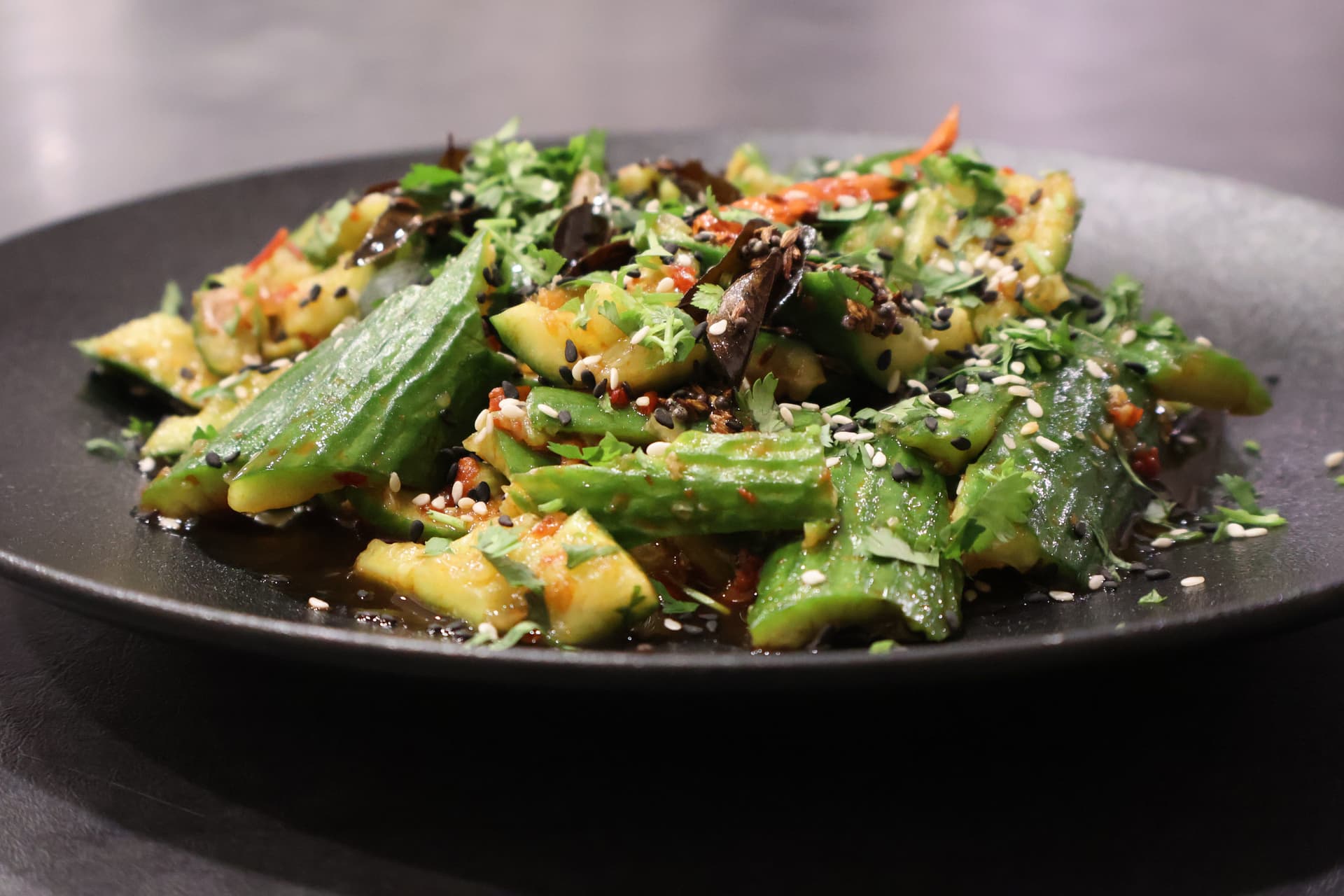
- Stir, then taste on something neutral — a cucumber, or just a clean spoon.
- You're listening for the sharpness that makes you grimace to disappear, not for sweetness to arrive.
- Stop the instant the edges round off. If you can actually taste "sweet," you've gone one pinch too far — add a splash more acid to pull it back.
What to watch and taste for
This is the part no recipe writes down. A balanced sauce hits salty → tangy → savory → warm, and if the situation calls for it, a bit of heat as well. The tell is physical: a too-sharp sauce makes you grimace, and the right amount of sugar makes that flinch vanish while the flavor stays bright. If it tastes rounder but you can't say why, that's exactly right — the sugar did its job and disappeared.
Common mistakes
- Adding too much. It tips from "rounded" into "salad-bar sweet" fast.
- Using sugar to fix over-salting. It only masks the salt; dilute or rebuild instead.
- Seasoning before tasting the base. You can't correct an edge you haven't found yet.
- Treating sugar as a flavor, not a tool. The goal is balance, never sweetness.
Common questions
Will my sauce taste sweet?
No — used below the sweetness threshold (a pinch, not a spoonful), sugar only rounds the acid and salt. If it tastes sweet, you've simply added too much; a splash more acid pulls it back.
Can I use honey or maple instead of sugar?
Yes. They balance the same way, but expect a faint flavor of their own — honey suits warm, nutty dressings and maple suits smoky ones. Mirin works well in Asian sauces.
Why not just use less vinegar or soy?
Then you lose the brightness and the savory depth you wanted in the first place. Sugar lets you keep both the acid and the salt and simply round off their hard edges.
Does this work for cooked dishes too?
Absolutely. A pinch in tomato sauce, curries, and braises does the same job — it tames the acidity and lets the other flavors read fuller and rounder.
Put it into practice
Now Go Cook It
Easy To Follow Soy Sesame Dressing With Chili Recipe
See how to make this soy sesame dressing with a spicy chili kick! This soy sesame dressing is easy to make and can be used for salads, noodles, and more!

Gurkensalat - Classic German Cucumber Salad Recipe
Gurkensalat is a classic German cucumber salad that's light, creamy, and ready in minutes. Fresh cucumbers, dill, and a tangy dressing make this traditional recipe a refreshing favorite.

Murgh Makhani - Authentic Butter Chicken Recipe
Make restaurant-style Murgh Makhani at home with this authentic butter chicken recipe. Rich, creamy, and packed with bold Indian flavors — your new favorite dinner awaits.
See it in action
Recipes Using This Technique
Free guide
7 Quick Dinners
Easy weeknight dinners you'll make on repeat.
40,000 home cooks a month cook from this site. Get one tested recipe a week from it, plus the weeknight tip that makes it work.
Comments
No comments yet — be the first to share your thoughts!
Leave a comment
Be the first to comment.