


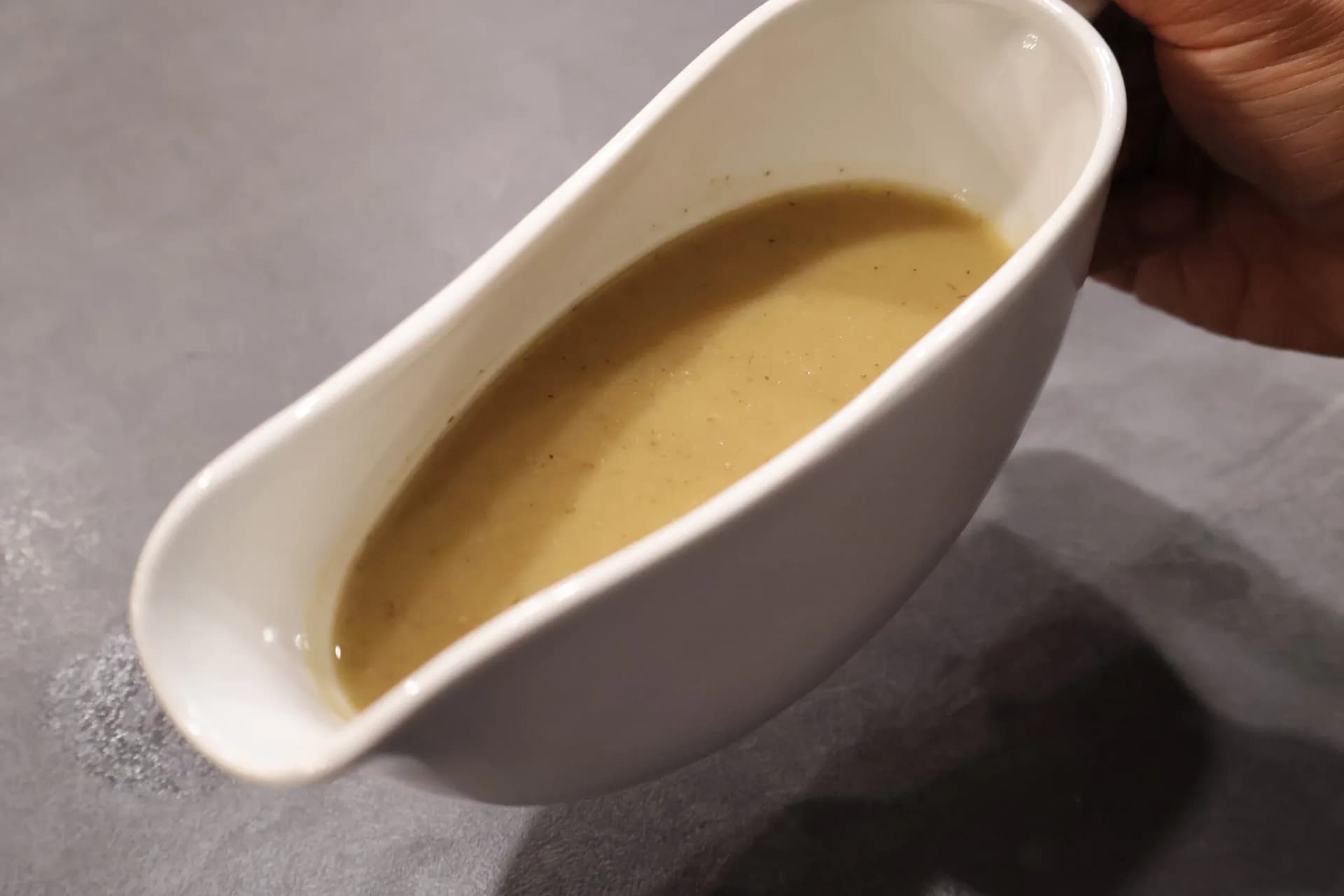
Crispy fries and squeaky cheese curds get all the love, but the gravy is what actually makes a poutine. This is the glossy, deeply savory beef-stock gravy from my Canadian poutine, pulled out on its own so you can pour it over just about anything.
Watch the recipe

As I mention in my NEW free guide to get you motivated to cook better than you ever have at home, The Chef’s Mindset, going out to eat can be an awesome source of inspiration! If you know me, I’ve been playing around with achieving the perfect gravy alongside my poutine for many years. I find the most flavorful gravy comes from those at food trucks here in Ottawa, Canada. I did have a gravy recipe out when I first launched my poutine recipe about 5 years ago, but as time went on I knew it was still missing that extra punch of flavor. You’ll see in this recipe what to do to REALLY take your gravy to the next level!
The One Thing That Makes It Work
Reduce first, thicken second. Once the base is built, let the gravy simmer until it has reduced by half — that is what concentrates the bouillon, broth and seasonings into something with real depth. Only then do you stir in a cornstarch slurry and simmer until it coats the back of a spoon. Thicken too early and you lock in a thin, watery flavor; reduce first and it tastes like it has been simmering all afternoon.
Pro tip
Add your liquids slowly and keep whisking. Stir the bouillon-and-water in first, then pour the broth in a steady stream while whisking the whole time — that is how you get a silky, lump-free gravy from the roux.
Tools Needed for Easy Poutine Gravy
Ingredients for This Poutine Gravy Recipe
Let’s break down what goes into the gravy — the full ingredient list with measurements is in the recipe card below.
Butter
Beef bouillon paste: the beefy backbone of the gravy — dissolved in water before it goes in.
Chicken broth: the main liquid; with the bouillon it reads rich and beef-forward.
Soy sauce: adds extra umami and that deep brown color.
Black pepper: freshly cracked has the most flavor.
Cornstarch: whisked with water into a slurry to thicken the gravy at the end.
How to Make the Best Poutine Gravy
Heat a saucepan over medium and add the butter and flour. Whisk well and cook out the roux until the raw flour smell is gone.


Combine the beef bouillon paste with water, then add it to the pan a little at a time, whisking until smooth. Slowly whisk in the chicken broth.
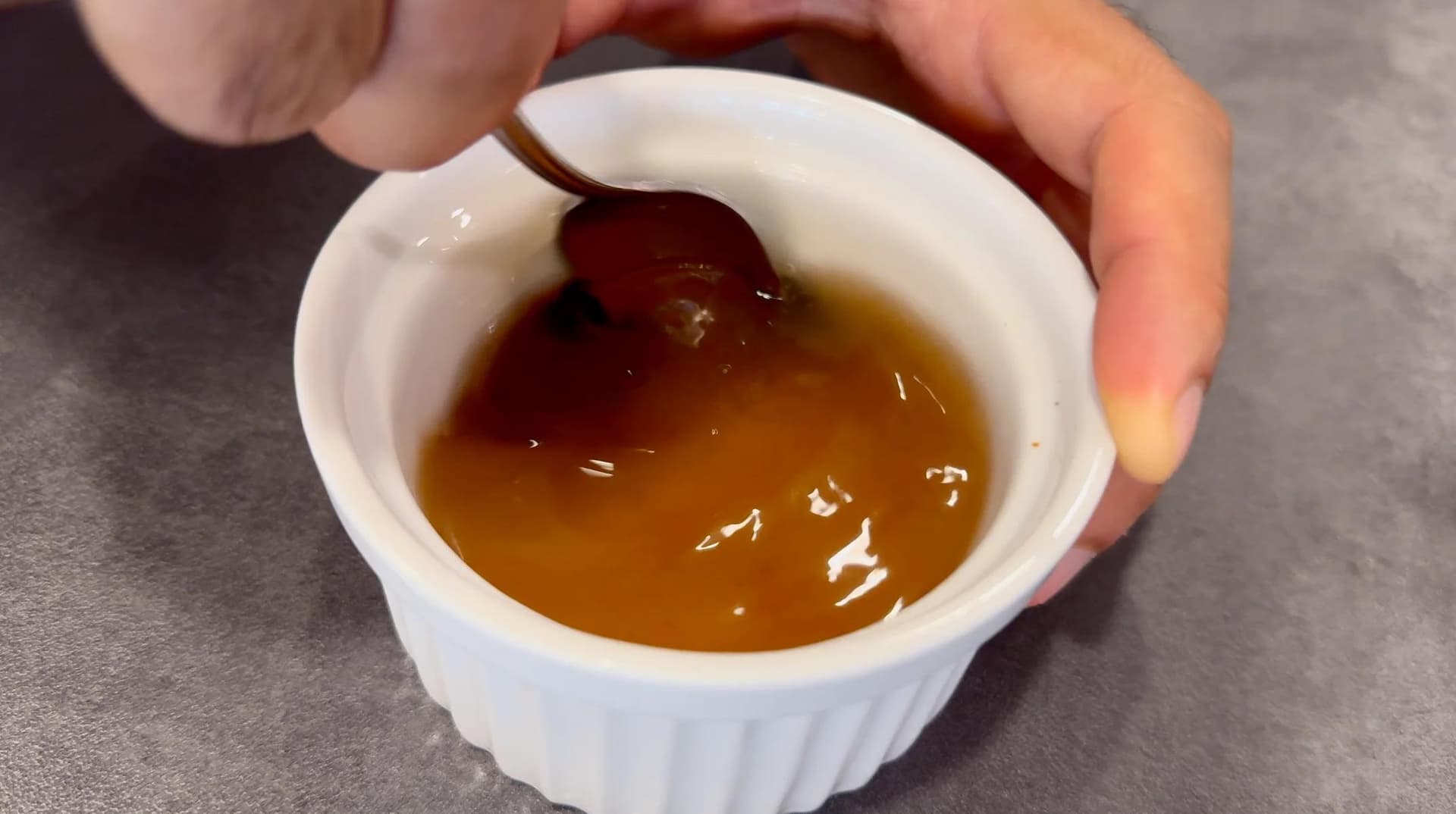

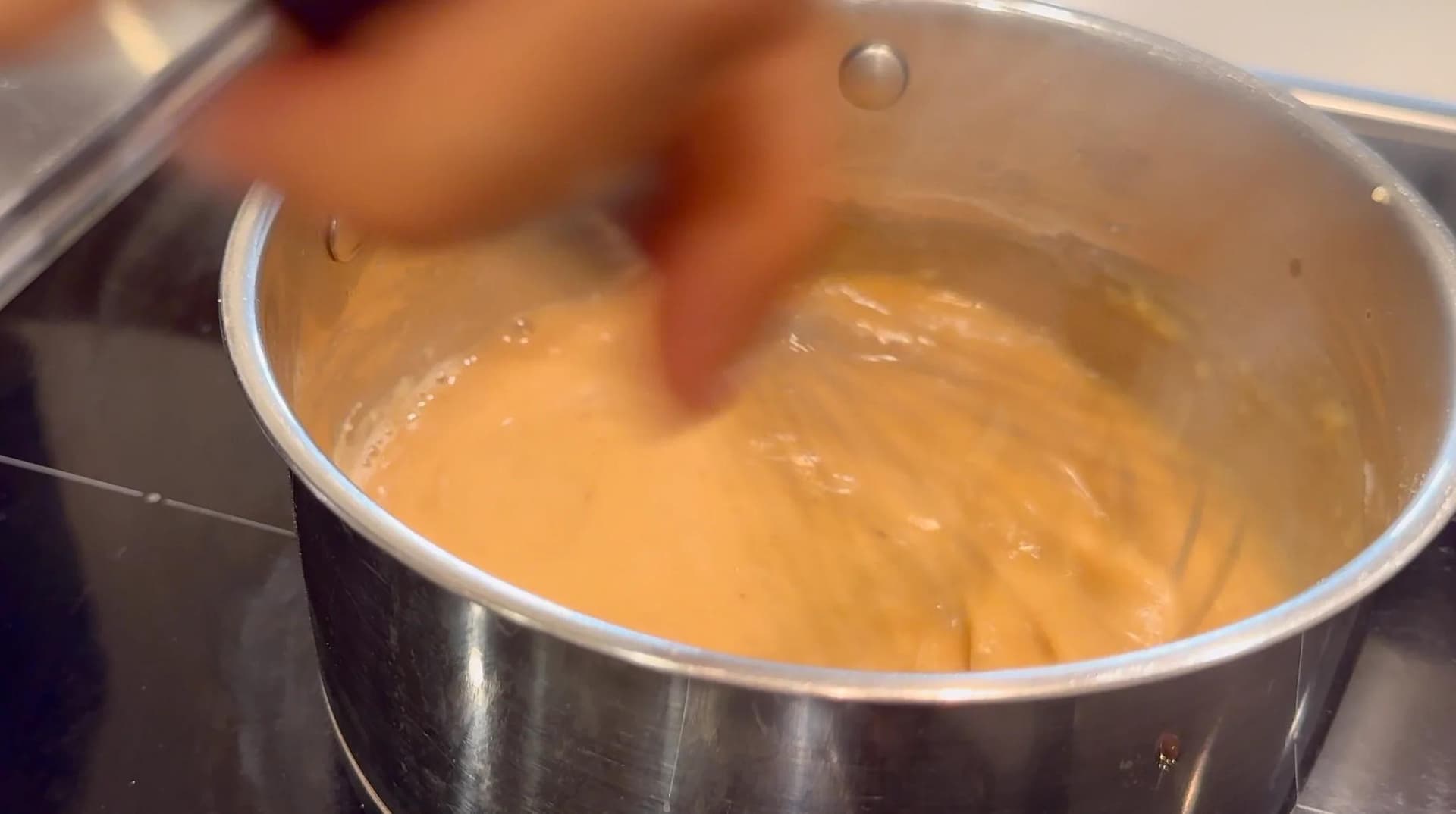
Add the garlic powder, onion powder, black pepper, Worcestershire sauce and soy sauce. Bring the gravy up to a simmer and cook until it has reduced by half in volume.


Taste and adjust the seasoning with a little more soy sauce, salt and pepper. Meanwhile, whisk the cornstarch together with water to make a slurry.
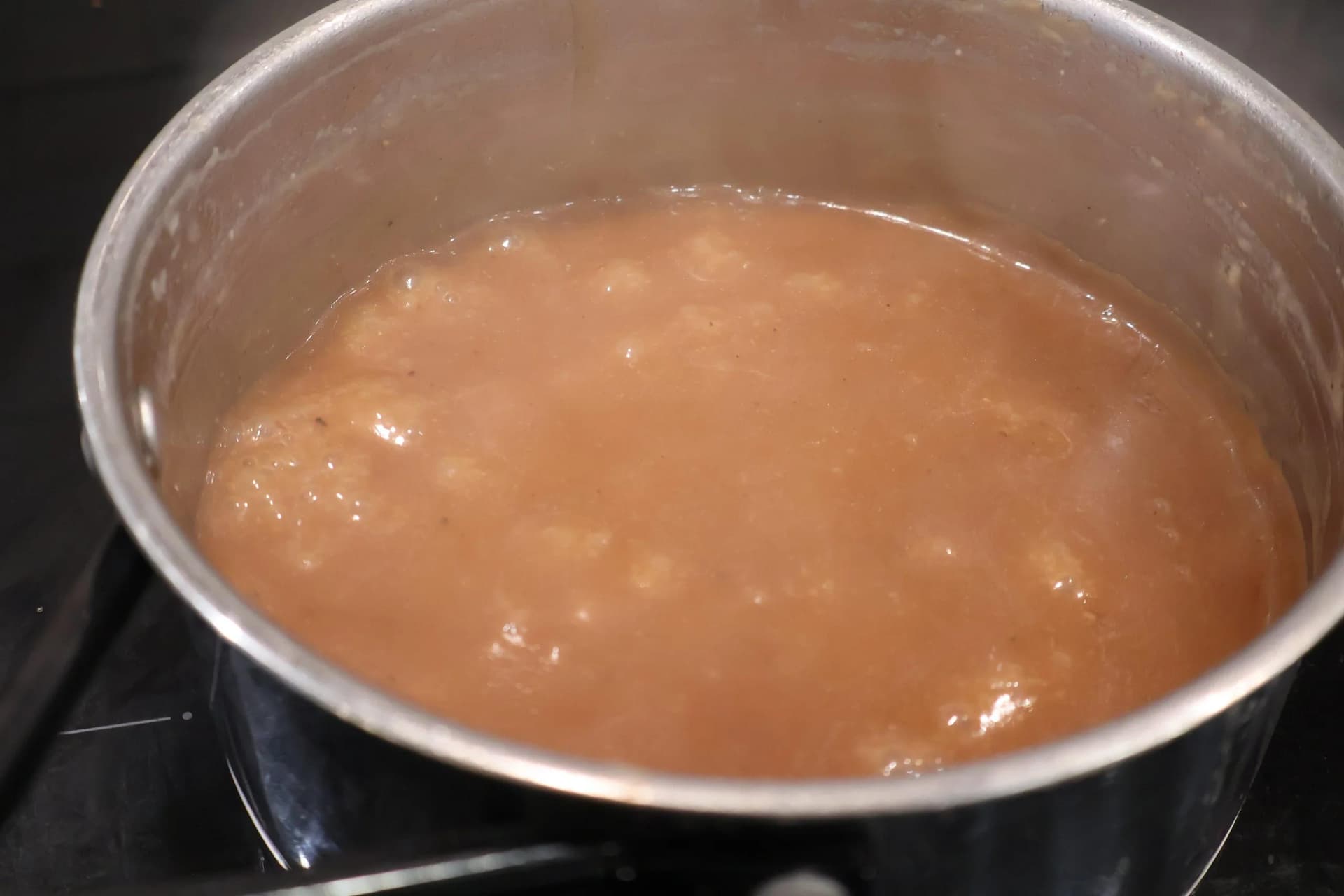

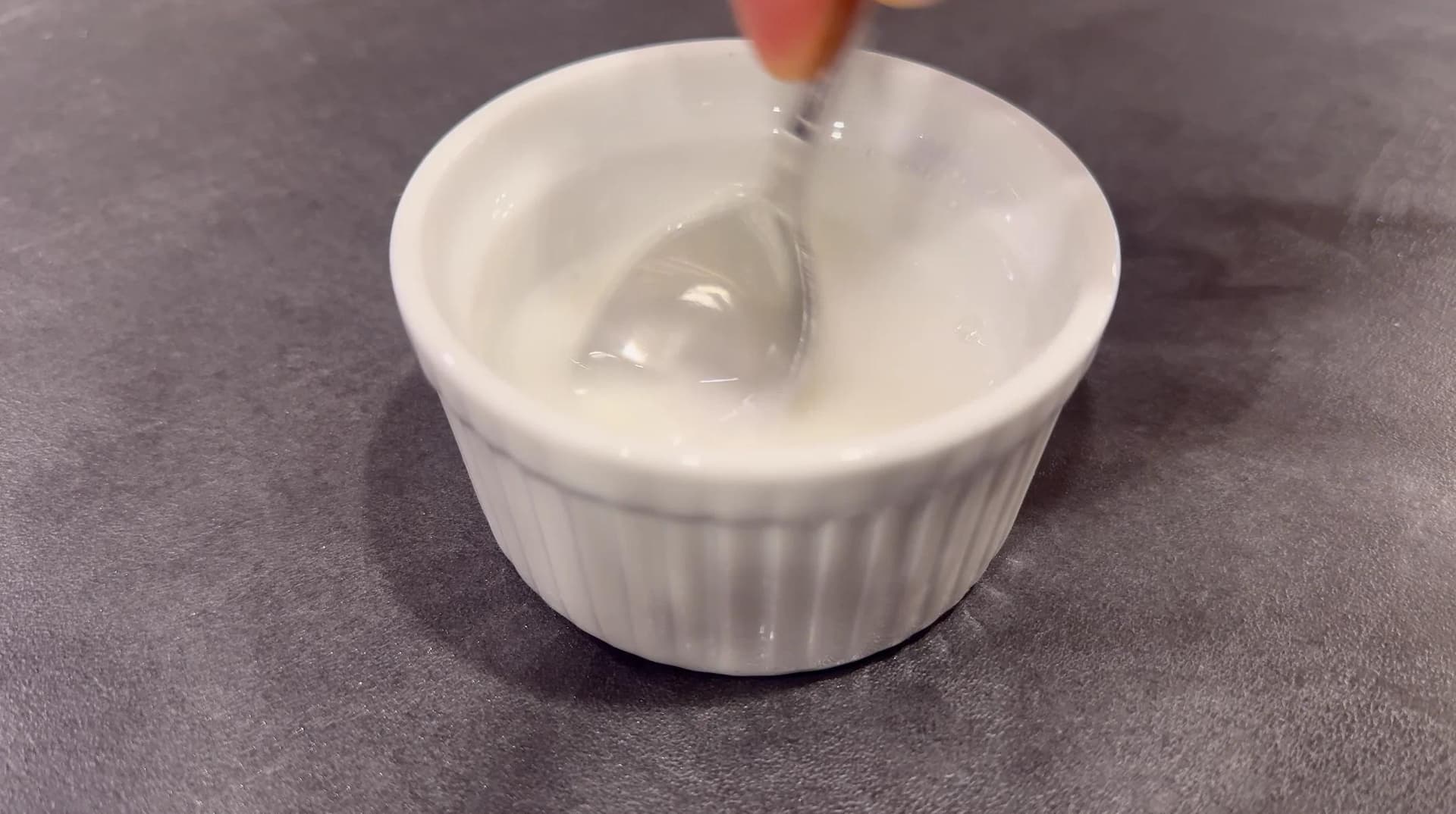
Stir the slurry into the gravy and mix well.


Simmer until the gravy is thick enough to coat the back of a spoon, then set it aside until your fries are ready.


Bring the gravy back up to heat before serving, thinning it with a splash of water if it has become too thick.

What to Pour Poutine Gravy Over
This gravy was born for a classic poutine — a pile of crispy fries and squeaky cheese curds — but it is far too good to stop there. I love it spooned over mashed potatoes or a Sunday roast, and it turns slices of roast beef or leftover turkey into a proper hot sandwich. It is just as at home over rice, roasted vegetables, meatloaf, or sausages and mash. Anywhere you would want a rich, beefy, pourable gravy, this one delivers.
Easy Swaps for This Poutine Gravy
Want to adjust the gravy to what is in your pantry, or to a dietary need? A few simple swaps work beautifully:
- Swap the chicken broth for vegetable broth for a lighter, meat-free base.
- Use tamari in place of the soy sauce to keep the gravy gluten-free.
- No cornstarch? An equal amount of arrowroot powder thickens it just the same.
- Out of beef bouillon paste? A beef bouillon cube works too — use one cube for every teaspoon of paste.
- No Worcestershire sauce? Stir in soy sauce with a dash of tamarind, or a splash of white vinegar, for that same savory tang.
How to Store and Reheat Poutine Gravy
This gravy is a great make-ahead — perfect for prepping before poutine night.
- Let it cool, then store it in an airtight container in the fridge for up to 3 to 4 days.
- It thickens as it chills, so reheat it gently and whisk in a splash of water or broth.
- You can freeze it for up to 3 months; thaw it in the fridge and reheat slowly, whisking well, since flour-thickened gravies can separate a little after freezing.
Want It Faster? Try the 5-Minute Chicken Gravy
When I was testing poutine I also made a quick version using a roasted chicken gravy mix — just whisk the packet with the amount of water it calls for, bring it to a simmer, and cook until it coats the back of a spoon. It comes together in a fraction of the time, and honestly I ended up loving it as much as the beef-stock version. It is my go-to when I want poutine without the wait.
Where Poutine Gravy Comes From
Poutine is a Quebec dish before it is anything else. The version most Canadians know — fries, cheese curds and hot gravy — is generally traced to rural Quebec in the late 1950s, and a few small towns there still argue over which of them served it first. It spread from diner counters and roadside canteens onto menus right across the country, which is why you will now find a plate of it just as easily in Ottawa as in Montreal.
Building a full plate? My Canadian poutine recipe covers the fries, the cheese curds and the order to layer them.
One note on seasoning before you pour. This gravy is built on beef bouillon paste and chicken broth rather than a from-scratch beef stock or chicken stock, and both the bouillon and the soy sauce carry a lot of salt, so the sodium adds up faster than you would expect. Taste it at the end before reaching for the salt cellar — more often than not it needs far less than you think.
Let me know what you think of this recipe in the comments! If you’ve tried this recipe, be sure to post it on social media and tag it with #cookingwithanadi and mention me @cooking.with.anadi. Thank you!
How I tested this
The thing that makes this taste like poutine gravy rather than just gravy is using both beef and chicken stock. I tried it with one or the other and it was never quite right. Beef alone is too heavy, chicken alone is too thin. Together is the flavour you are actually looking for.
Recipe by Anadi Misra
The best homemade poutine gravy — a rich, glossy beef-stock gravy built on a simple butter-and-flour roux and seasoned with garlic, onion, Worcestershire and soy. It comes together in one saucepan and is perfect over fries and cheese curds, mashed potatoes or a Sunday roast.
Stovetop
5.0 · 11 ratings
2 min
Prep
40 min
Cook
42 min
Total
2
Cups
makes 13½–16 fl oz
medium
Level
Ingredients
Ingredients
Tap any quantity to scale
- (28 g) butter
- (16 g) all-purpose flourShop →
- (5 ml) beef bouillon paste
- (240 ml) water(for the bouillon paste)
- (600 ml) chicken brothShop →
- (1 g) garlic powderShop →
- (1 g) onion powderShop →
- (4 ml) Worcestershire sauceShop →
- (20 ml) soy sauceShop →
- black pepper(to taste)Shop →
- salt(to taste)Shop →
- (3 g) cornstarch(mixed with water)Shop →
- (30 ml) water(for the cornstarch slurry)
Instructions
- 1
Heat a saucepan on medium heat and add butter and flour. Whisk well and cook out the roux, until the rawness of the flour is cooked out.
Heat a saucepan on medium heat and add butter and flour. Whisk well and cook out the roux, until the rawness of the flour is cooked out.
- 2
Combine beef bouillon paste with water and add this slowly to the saucepan and whisk until well combined. Then, slowly start adding the chicken broth and whisk well.
Combine beef bouillon paste with water and add this slowly to the saucepan and whisk until well combined. Then, slowly start adding the chicken broth and whisk well.
- 3
Add garlic powder, onion powder, black pepper, Worcestershire sauce, and soy sauce. Mix well and then bring the gravy up to a simmer and cook until reduced by half in volume.
Add garlic powder, onion powder, black pepper, Worcestershire sauce, and soy sauce. Mix well and then bring the gravy up to a simmer and cook until reduced by half in volume.
- 4
Once the stock has reduced by half, taste and adjust seasoning as needed with additional soy sauce, salt and pepper. In the meanwhile, prepare a cornstarch slurry by whisking together cornstarch with water.
Once the stock has reduced by half, taste and adjust seasoning as needed with additional soy sauce, salt and pepper. In the meanwhile, prepare a cornstarch slurry by whisking together cornstarch with water.
- 5
Add slurry to the gravy and mix well.
Add slurry to the gravy and mix well.
- 6
Simmer until the gravy has thickened enough to coat the back of a spoon and set aside until fries are ready.
Simmer until the gravy has thickened enough to coat the back of a spoon and set aside until fries are ready.
- 7
Bring the gravy back up to heat before serving and adjust consistency with water if required.
Bring the gravy back up to heat before serving and adjust consistency with water if required.
Did you make this recipe? Tag @cooking.with.anadi on Instagram and hashtag it #cookingwithanadi

Tested & written in Anadi’s kitchen
Recipe history
- July 4, 2026 — Reworked and refreshed for the 2026 relaunch — new photography, restructured and standardized ingredients & instructions.
What to Serve It With
As the name suggests, this specific gravy recipe is typically used for poutine! However, there’s no need to limit the uses here to poutine — here are other dishes that you can top your gravy over:
Frequently Asked Questions
Can I make this ahead of time?▼
Yes — this gravy holds well. Make it ahead and set it aside, then bring it back up to heat just before serving, whisking in a splash of water to loosen it back to a pourable consistency.
What broth should I use for poutine gravy?▼
I use a boxed broth I have come to like after trying a lot of them, and the beef bouillon paste is what gives the gravy its deep, beefy flavor. Canned broth is traditional for poutine if you can find one you like — the bouillon does the heavy lifting either way.
Can I Make Poutine Gravy in Advance?
Store leftover gravy in an airtight container in the fridge for up to 3 to 4 days. It thickens as it chills, so reheat it gently on the stovetop and whisk in a little water until it is pourable again.
Let me know what you think of this poutine gravy in the comments!
You might also like
Hearty Gravy from Scratch: Transform Your Holiday Dinner
Make rich, velvety gravy from scratch using pan drippings and flour. Perfect for holidays or weeknights, this foolproof recipe delivers deep, savory flavor every time.
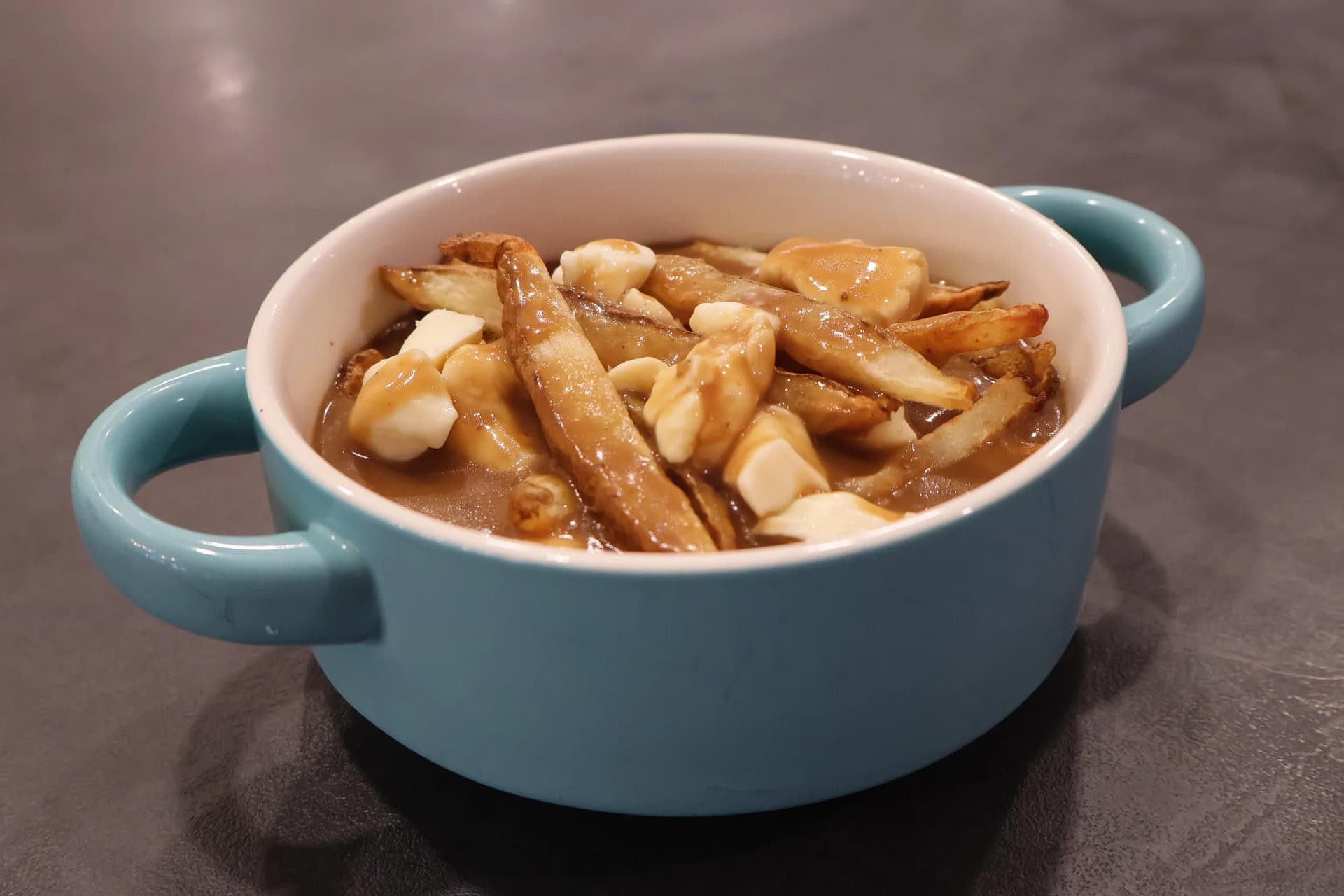
Discover the Best Canadian Poutine Recipe Ever!
Crispy baked fries, rich homemade gravy, and squeaky cheese curds make this Canadian poutine recipe truly unforgettable. Easy to make and loaded with comfort, it is the ultimate side or meal.

Super Juicy Air Fryer Chicken Breast Recipe
Juicy, tender air fryer chicken breast ready in minutes. A foolproof gluten-free recipe perfect for busy weeknights. Crispy outside, moist inside — guaranteed results every time.
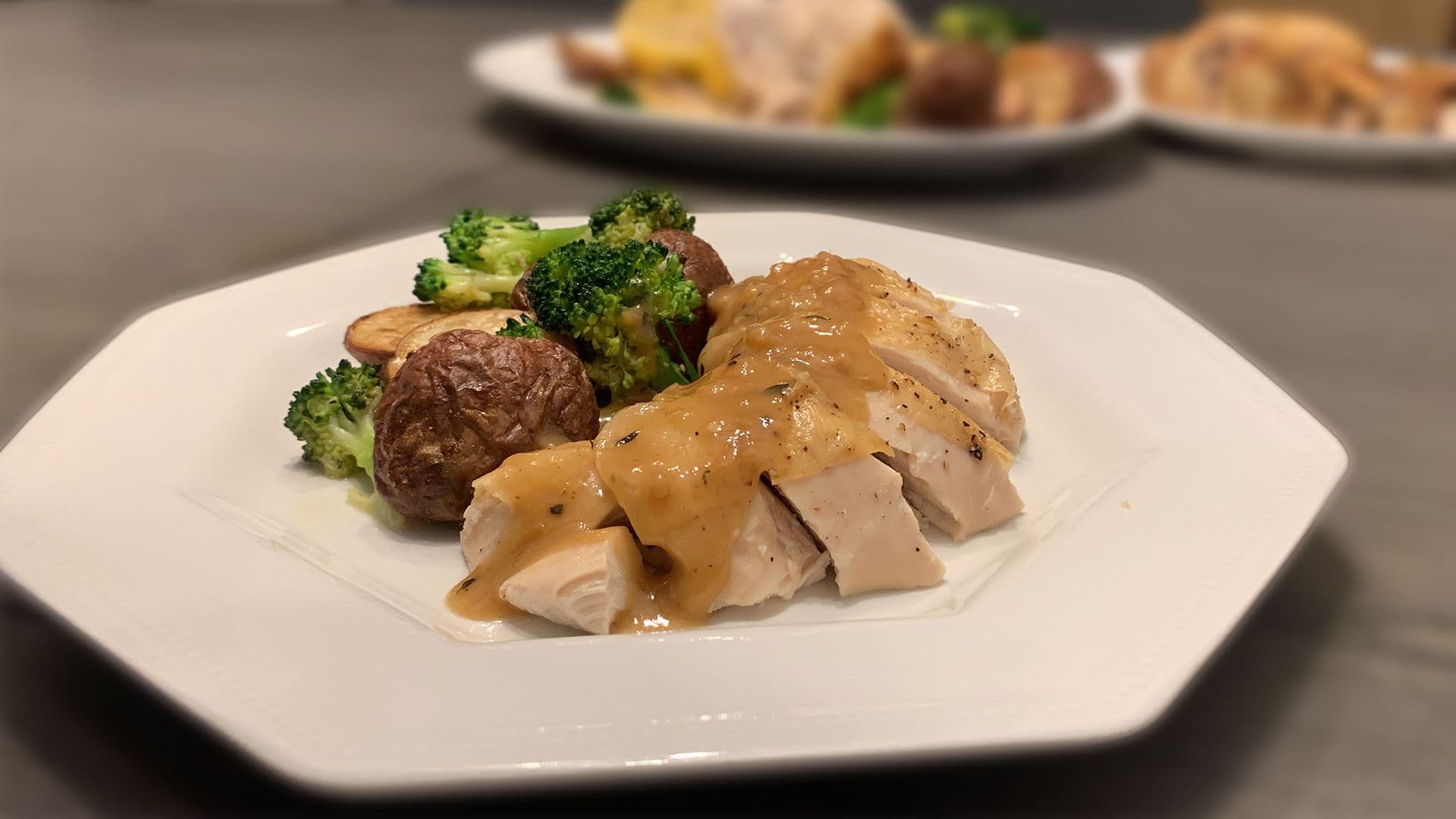
Juicy & Delicious No-Fail Roast Chicken Recipe
Juicy, golden, and practically foolproof — this whole roasted chicken recipe delivers crispy skin and tender meat every time. Perfect for Sunday dinner or any night you want something impressive yet simple.

The Ultimate Canadian Poutine Recipe with Mushrooms & Bacon
Make the ultimate Canadian poutine with crispy baked fries, rich homemade gravy, squeaky cheese curds, smoky bacon, and mushrooms. A hearty comfort food classic worth making tonight.

Mouthwatering Indian Fusion Aloo Keema Poutine Recipe
Craving a bold twist on a classic? This Indian Fusion Aloo Keema Poutine combines crispy baked fries, spiced minced meat, and rich gravy for an unforgettable fusion dish you will love.


Comments
No comments yet — be the first to share your thoughts!
Leave a review
Be the first to share how it went — your note helps other cooks (and earns the recipe its stars).