
braising
The technique that makes cheap cuts taste better than expensive ones
Braising converts collagen — tough connective tissue — into gelatin through low, steady heat. The sauce thickens itself. Learn the three-step sequence (sear, deglaze, go low and slow) that restaurant kitchens never skip.

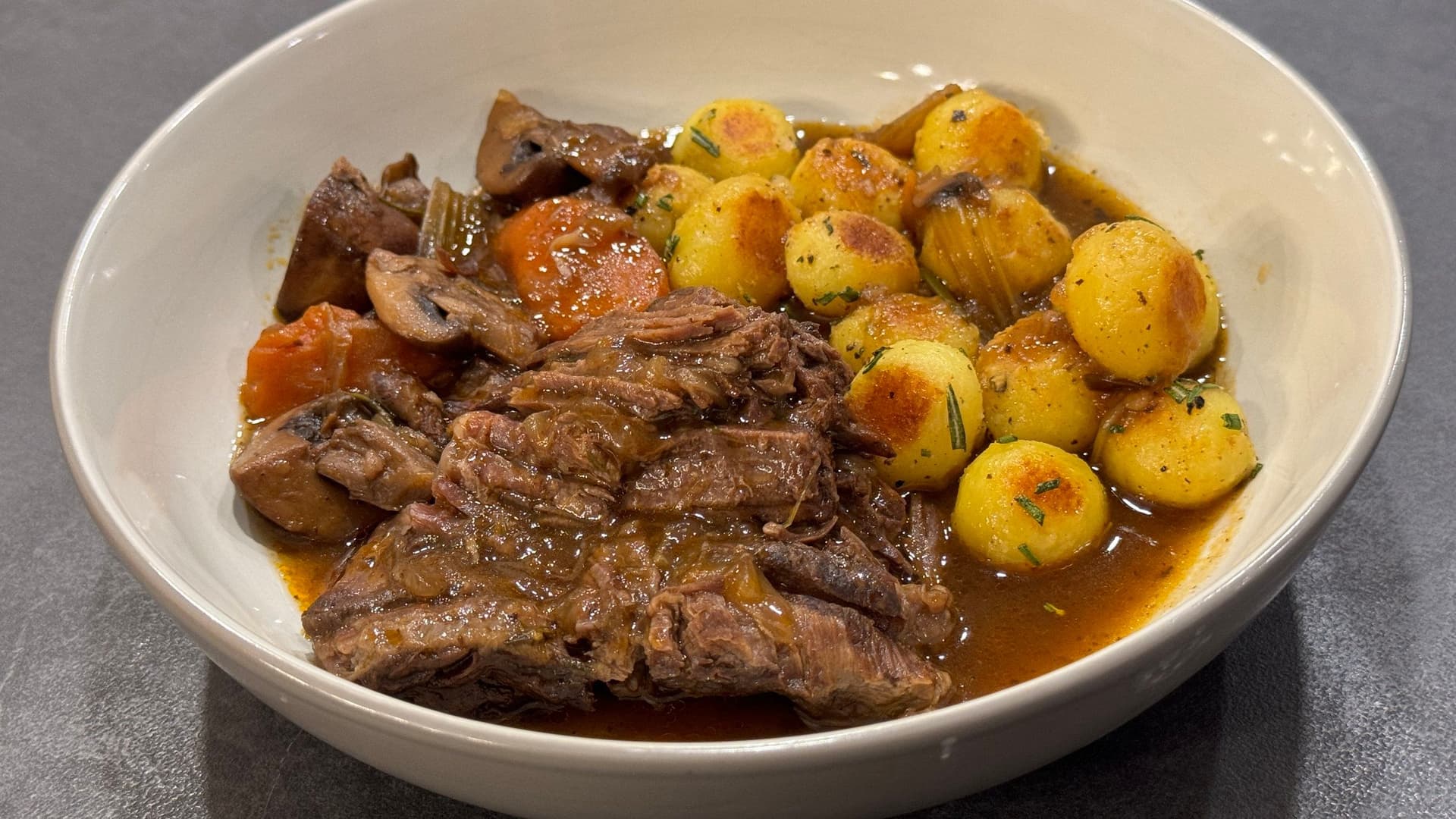
Braised dishes are some of the highest-margin items on any restaurant menu. Short rib, lamb shank, oxtail — all cheaper by weight than a ribeye, all tasting richer. The reason is time and low heat, which turn cheap, tough, collagen-heavy cuts into something a quick sear on an expensive steak can't touch. And the sauce thickens itself. You cannot fake that with cornstarch.
Braising is not stewing
The line matters: braising is partial submersion — the liquid comes a third to halfway up the side of the meat. Stewing is full submersion. In a braise, the exposed top steams in the humid, covered environment while the bottom slow-cooks in liquid, and that dual environment gives braised meat its particular texture. Both methods are valid; they are just different.
The mechanism: collagen to gelatin
Collagen is the connective tissue that makes cheap cuts tough at high heat. Held at a low, steady temperature (roughly 80–100°C) for a few hours, it slowly converts to gelatin — which dissolves into the cooking liquid. As the liquid reduces, the gelatin concentrates and the sauce turns silky and thick on its own. That is why a proper braise needs no thickener: the meat did the work. Too hot and the collagen tightens instead of converting; too cool and conversion stalls.
The three-step sequence
- Sear. Dry the meat, get the pan ripping hot, and brown every side. The Maillard crust adds flavor, and the fond — the brown bits stuck to the pan — is the single most concentrated source of flavor in the dish. Do not throw it away.
- Deglaze. Add liquid (stock, wine, tomatoes) to the hot pan and scrape up every bit of fond. This is what makes the braising liquid taste like something from the first minute. Skip it and that flavor stays welded to the pan.
- Low and slow. The liquid should barely simmer, never boil — hard boiling makes the fibers contract and go stringy. Aim for a bare bubble around 85–95°C. An oven braise is steadier than the stovetop because the heat surrounds the pot.
The liquid ratio
A third to halfway up the meat. Less and the top can dry out; more and you are stewing. Use stock rather than water so the liquid is flavorful on its own, and cover tightly — a sheet of foil under the lid if your pot doesn't seal — so the steam condenses on the lid and drips back onto the exposed meat. That cycle is what keeps the top moist.
Common mistakes
- Skipping the sear. The fond is roughly a third of the final flavor. Always sear.
- Boiling instead of simmering. Violence makes tough, stringy meat. Collagen wants time, not heat.
- Under-cooking. Conversion isn't done until the meat is truly tender — a fork should slide in with zero resistance, which can take 3–6 hours depending on the cut.
- Not resting. Let the meat sit in its liquid 20–30 minutes before serving so it reabsorbs the gelatin-rich juices.
Common questions
What is the difference between braising and stewing?
Braising uses partial submersion — liquid a third to halfway up larger pieces of meat — so the top steams while the bottom simmers. Stewing fully submerges smaller, uniform pieces. Same low-and-slow principle, different texture and presentation.
Do I really need to sear the meat before braising?
Yes. The sear builds a Maillard crust and leaves fond — browned bits — in the pan, and deglazing that fond into the braising liquid is where a large share of the final flavor comes from. An unseared braise tastes noticeably flat.
Why is my braised meat tough instead of tender?
Usually the liquid was boiling rather than barely simmering, or it simply hasn't cooked long enough. Keep it at a bare bubble and give the collagen time — it's done when a fork meets no resistance, not at a fixed clock time.
Can I braise in the oven instead of on the stovetop?
Yes, and it is often better — the oven surrounds the pot with even heat and holds a gentle temperature more reliably than a burner. Bring it to a simmer on the stove, cover, then transfer to a low oven (around 150°C).
Put it into practice
Now Go Cook It

Hearty Molha de Carne Recipe: Portuguese Beef Stew
Discover Molha de Carne, a rich and hearty Portuguese beef stew slow-cooked with tender potatoes and bold spices. A traditional comfort dish perfect for lunch or dinner.

Comforting Authentic Pakistani Lamb Haleem Recipe
Slow-cooked Pakistani Lamb Haleem packed with tender meat, wholesome grains, and bold spices. A rich, hearty dish that brings authentic comfort to your table with every warming bowl.

Slow-Cooked Instant Pot Chicken Changezi Recipe
Tender, flavorful Chicken Changezi made effortlessly in the Instant Pot. This rich, creamy Indian classic is a perfect one-pot meal for lunch or dinner that the whole family will love.
See it in action
Recipes Using This Technique
Free guide
7 Quick Dinners
Easy weeknight dinners you'll make on repeat.
40,000 home cooks a month cook from this site. Get one tested recipe a week from it, plus the weeknight tip that makes it work.
Comments
No comments yet — be the first to share your thoughts!
Leave a comment
Be the first to comment.